Floor Rail Conveyor System for Industrial Painting Lines
Product Overview
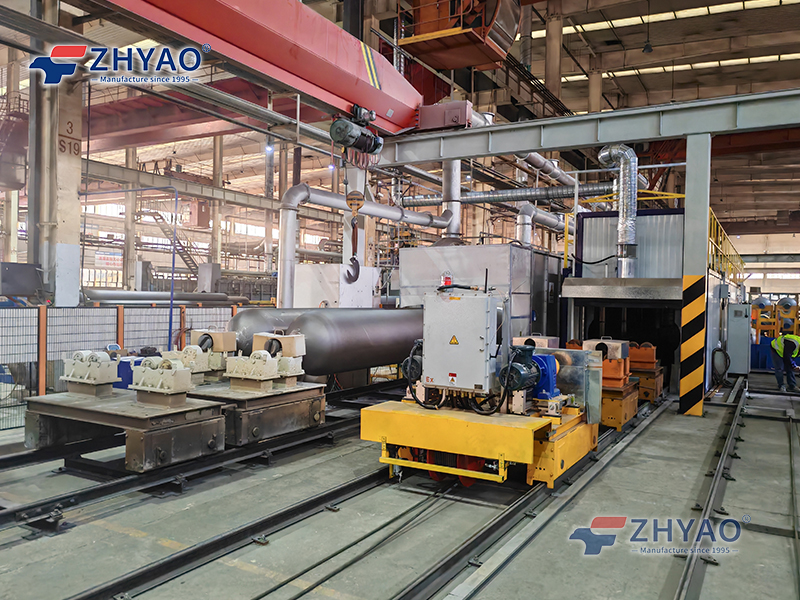
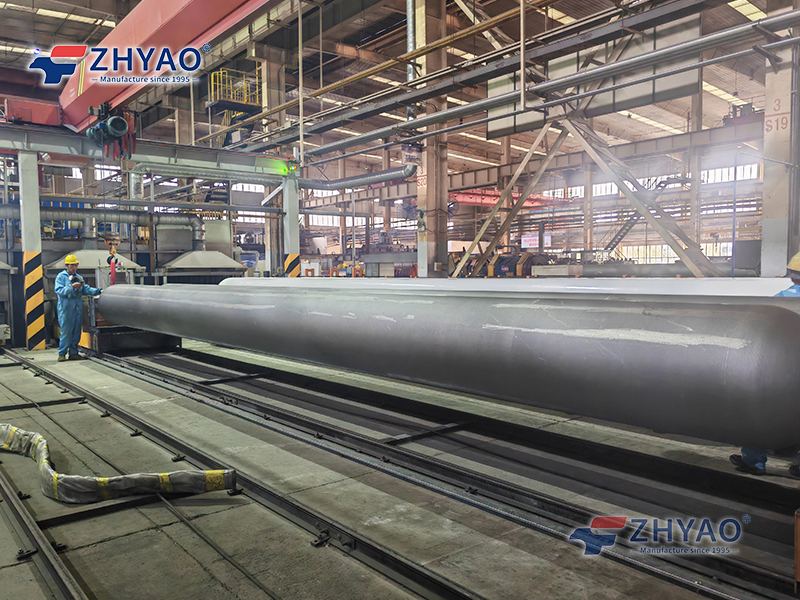
A floor rail conveyor system is designed to move large, heavy, or difficult-to-suspend workpieces through industrial surface finishing processes. Instead of hanging products from an overhead conveyor, the workpieces are placed on dedicated trolleys, transfer cars, or customized carriers that travel along rails installed at floor level.
This conveying method is suitable for manufacturing facilities handling heavy machinery components, steel structures, equipment frames, pressure vessels, and other large metal products. It can be integrated with pretreatment stations, drying ovens, spray painting booths, powder coating booths, and curing ovens according to the required process flow.
For manufacturers planning a new painting line, the main consideration is not simply whether the conveyor can carry the workpiece. The rail layout, load distribution, carrier dimensions, transport rhythm, and access to each coating station must work together. These factors influence how smoothly products move through the line and how easily operators can perform spraying, inspection, and maintenance.
1. Industrial Applications
Floor rail conveyor systems can be configured for a range of surface finishing applications, including:
Construction machinery frames and components
Heavy equipment housings and machine bases
Steel structures, fabricated metal parts, and welded assemblies
Pressure vessels and large industrial tanks
Electrical cabinets and large equipment enclosures
Agricultural machinery and transportation equipment
Large metal products requiring liquid painting or powder coating
2. System Design and Main Components
A floor rail conveyor is typically designed around the workpiece and the production process rather than a fixed standard layout.
Floor-Mounted Rail Track
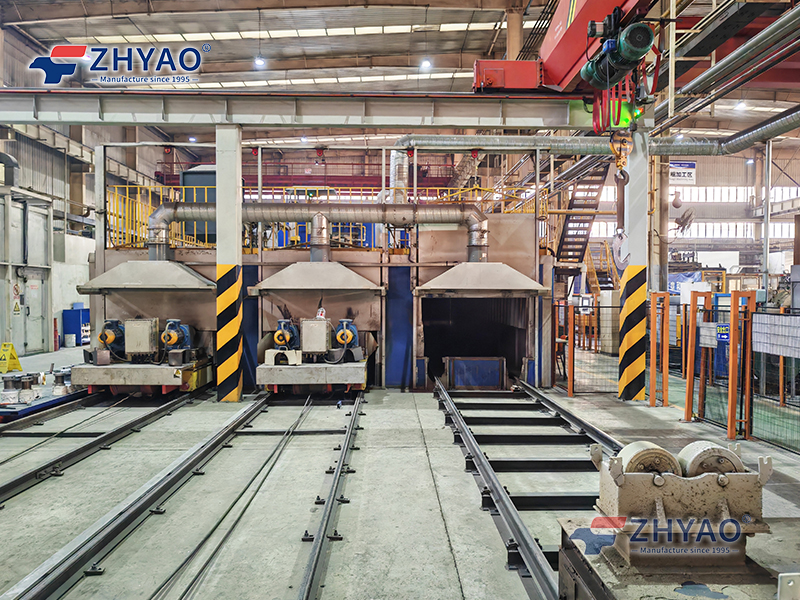
The rail track establishes the transport route between processing stations. Its configuration depends on workshop dimensions, workpiece size, turning requirements, floor conditions, and the positioning of coating equipment. Straight sections, transfer points, and turning arrangements can be incorporated where the design requires them.
Workpiece Trolleys and Carriers
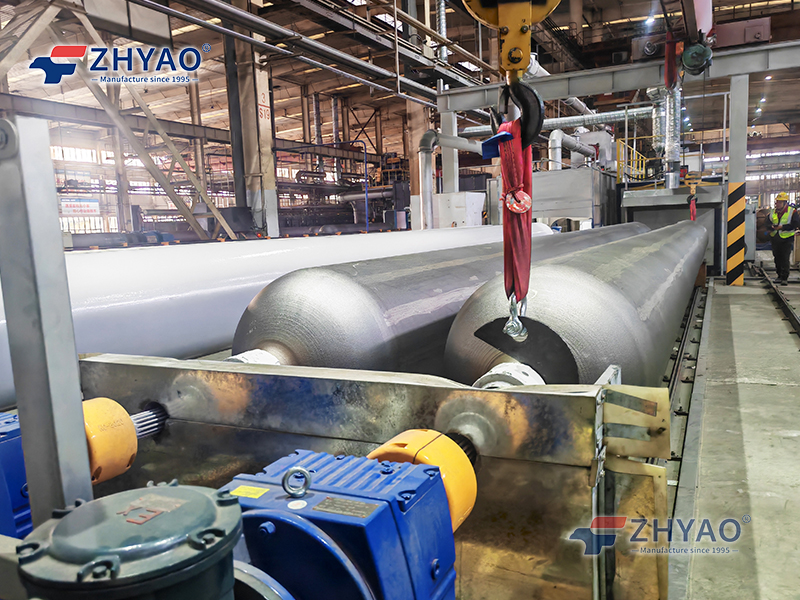
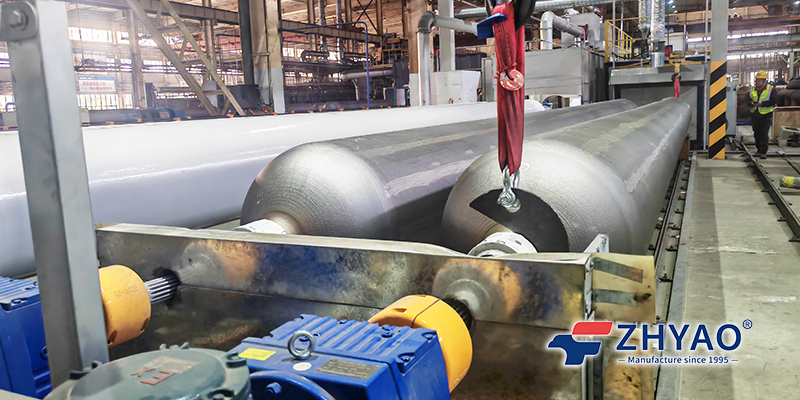
Trolleys or transfer cars support the workpieces during transportation. Their frame structure, wheel arrangement, support points, and loading surface are selected according to the product's weight, dimensions, and center of gravity.
For irregularly shaped products, customized fixtures may be necessary to prevent movement during transport and maintain a suitable orientation for spraying.
Drive and Transport Mechanism
Depending on the operating requirements, the system may use manual trolley movement, powered transfer cars, chain-driven transport, or other suitable drive arrangements. Manual or intermittent movement can suit batch production, while powered systems can support more coordinated movement between stations.
The appropriate configuration depends on the required production output, travel distance, loading method, and degree of automation.
Control and Positioning System
For powered systems, control components coordinate movement and positioning at designated stations. Optional interlocks can be incorporated to coordinate conveyor movement with spray booth doors, lifting equipment, or other process units where necessary.
Integration with Painting and Curing Equipment
The floor rail conveyor can be designed as part of a complete surface finishing line. A typical process may include:
Loading → Pretreatment → Drying → Spray Painting → Curing → Cooling
The actual sequence depends on the coating material, substrate, and production requirements. For powder coating, the curing stage must follow the powder manufacturer's specified temperature and time conditions. For liquid painting, flash-off and drying requirements depend on the coating formulation and process.
3. Key Advantages of a Floor Rail Conveyor
Suitable for Heavy Workpieces
Floor-level support avoids the need to suspend the entire workpiece from an overhead track. This makes the system a practical option for products whose weight, dimensions, or geometry make overhead transport unsuitable.
Flexible Loading Arrangements
Large or irregular products can be positioned on customized carriers. This is useful when different models share a production line but require different support points or loading orientations.
Adaptable to Workshop Layouts
The rail route can be planned around existing equipment, available floor space, and the required sequence of operations. For retrofit projects, existing buildings and floor conditions should be evaluated before the final layout is confirmed.
Compatible with Batch and Powered Transport
Depending on the configuration, the system can support manual movement, intermittent transfer, or powered transportation. This allows manufacturers to select a transport method that matches their actual production rhythm rather than adding unnecessary automation.
Designed for Complete Coating Processes
With appropriate carrier design and station positioning, the conveyor can connect pretreatment, painting, and curing operations. The design should also consider workpiece clearance, operator access, overspray exposure, and the effects of oven temperatures on conveyor components.
4. Technical Parameters
The following table lists the main parameters used to develop a customized floor rail conveyor system. Final specifications should be confirmed after reviewing the workpieces, production requirements, and installation environment.
Parameter | Design Considerations |
|---|---|
Conveyor type | Manual trolley, powered transfer car, chain-driven, or customized floor rail system |
Workpiece load | Based on maximum workpiece weight and carrier self-weight |
Workpiece dimensions | Maximum length, width, height, and overall envelope |
Carrier structure | Customized according to product shape and support requirements |
Rail layout | Straight, turning, transfer, or multi-station configuration |
Conveying mode | Manual, intermittent, or powered movement |
Operating speed | Determined by required output and process time |
Production capacity | Calculated from loading quantity, cycle time, and operating schedule |
Drive system | Selected according to load, route, and operating frequency |
Control system | Manual controls or coordinated electrical control, as required |
Coating equipment integration | Pretreatment, spray booth, drying oven, curing oven, and related equipment |
Installation conditions | Floor load capacity, rail foundation, available space, and equipment clearances |
Important design note: Conveyor load capacity, track dimensions, speed, motor power, and overall line dimensions cannot be specified accurately without project information. The final technical specification should state the rated load per carrier, the maximum permitted workpiece envelope, and the operating conditions.
5. How to Specify and Order a Floor Rail Conveyor System
To prepare a suitable technical proposal, the conveyor manufacturer needs to understand the products being transported, the intended production capacity, and the available installation space.
Please provide the following information:
Factory dimensions: Available length, width, height, and floor layout.
Production output: Expected output per 8-hour working day and per 30-day month.
Workpiece material: Such as carbon steel, stainless steel, aluminum, or other materials.
Workpiece dimensions: Maximum and typical length, width, and height.
Workpiece weight: Individual product weight and estimated carrier load.
Product mix: Number of product types and frequency of model changes.
Transport requirements: Manual or powered movement, required positioning, and transfer distance.
Coating process: Liquid painting, powder coating, or a combination of surface finishing operations.
Color-change frequency: How often the coating color changes, if relevant to the proposed line.
Existing equipment: Details of any spray booths, ovens, pretreatment equipment, or conveyors that must be connected.
After reviewing these details, ZHYAO can develop a proposed rail layout, carrier configuration, transport method, and equipment arrangement for the project. The design can then be evaluated against the factory layout, operating requirements, and budget before manufacturing begins.
6. Why Choose ZHYAO for Your Floor Rail Conveyor Project?
ZHYAO provides customized conveying and coating equipment for industrial surface finishing applications. The focus is on matching the mechanical transport system to the workpiece and the production process rather than selecting a conveyor independently of the rest of the line.
Our project planning can cover rail layout, carrier design, transport equipment, and coordination with pretreatment, spray painting, and curing systems. Where a complete painting line is required, the related equipment can be considered as one integrated production solution.
For heavy or oversized products, particular attention is given to load distribution, carrier stability, positioning requirements, and the space needed for operators and maintenance personnel. These details help establish a practical design before equipment fabrication and installation.
7. Discuss Your Floor Rail Conveyor Requirements
Planning a new painting line or upgrading an existing transport system? Send us your workpiece dimensions, maximum load, expected production output, and factory layout.
ZHYAO will review your requirements and help determine a suitable floor rail conveyor configuration for your coating process.
Request a Customized Conveyor Solution