
Robotic Coating Lines: Key to Upgrading Industrial Surface Treatment | Zhanyao
Industrial surface treatment is an important link affecting the service life, appearance quality and market competitiveness of products. With the continuous improvement of global industrial production standards, the requirements for coating quality, production efficiency and environmental protection are becoming more and more strict. Traditional coating methods can no longer keep up with the pace of industrial upgrading, and robotic coating lines have become an important driving force for the transformation and upgrading of the surface treatment industry.
Many manufacturers still face common challenges in the coating process: manual operation is easily affected by subjective factors, resulting in inconsistent coating quality; the working environment of manual spraying is harsh, with high risks of occupational diseases; the utilization rate of coatings is low, leading to high production costs and environmental pressure. These problems not only restrict the improvement of production efficiency, but also affect the ability of enterprises to participate in international competition.
Robotic coating lines, as an intelligent upgrade of traditional coating equipment, have fundamentally solved the above pain points by virtue of their unique technical advantages. Different from semi-automatic equipment that requires manual assistance, robotic coating systems realize full-process automation from workpiece feeding, spraying to curing and unloading, which not only reduces the dependence on manual labor, but also ensures the consistency of batch production quality.
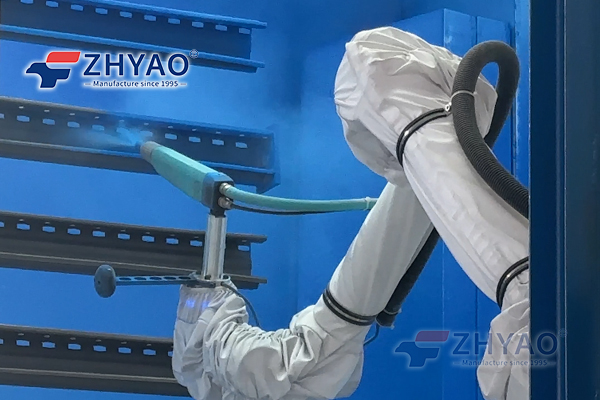
In terms of technical characteristics, robotic coating lines have obvious advantages in adaptability and applicability. They can be flexibly applied to different types of workpieces, including small precision parts, large mechanical components, and workpieces with complex curved surfaces. The multi-axis robotic arm can freely adjust the spraying angle, enabling uniform spraying of dead corners such as workpiece inner cavities and grooves that are difficult to reach by manual operation. At the same time, the intelligent control system can accurately control the coating thickness and spraying speed, ensuring that the coating meets the technical standards of different industries.
In terms of application scenarios, robotic coating lines have been widely used in various fields such as electrical equipment, mechanical manufacturing, hardware products, and auto parts. For example, in the production of electrical cabinets, robotic coating can ensure the uniformity of the coating, enhance the insulation and corrosion resistance of the product; in the production of auto parts, it can meet the high-precision and high-gloss requirements of the coating, improving the product grade.
For manufacturers who are preparing to introduce robotic coating lines, it is crucial to choose equipment that is suitable for their own production needs. It is not advisable to pursue high configuration blindly, but to comprehensively consider factors such as production scale, workpiece characteristics, and coating standards. At the same time, it is necessary to pay attention to the technical maturity and after-sales support of the equipment to avoid production delays caused by technical problems.
Focusing on the field of industrial coating equipment for many years, Zhanyao has accumulated rich experience in product R&D and practical application. The robotic coating lines launched by Zhanyao are designed according to the actual production needs of different industries, with stable performance, simple operation and high cost performance. They can not only help enterprises solve traditional coating pain points, but also provide technical support and after-sales services throughout the process, helping enterprises achieve efficient and green production.
With the continuous advancement of intelligent manufacturing, robotic coating technology will continue to innovate, and its application scope will be further expanded. For industrial manufacturers, introducing robotic coating lines is not only a choice to adapt to industrial upgrading, but also an important measure to enhance product competitiveness and realize sustainable development.
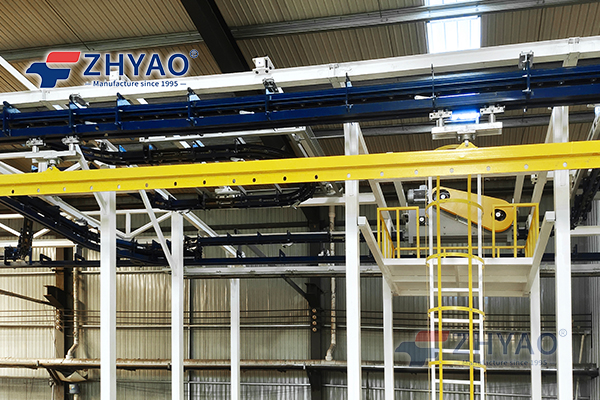 Automatic vs Manual Powder Coating Line
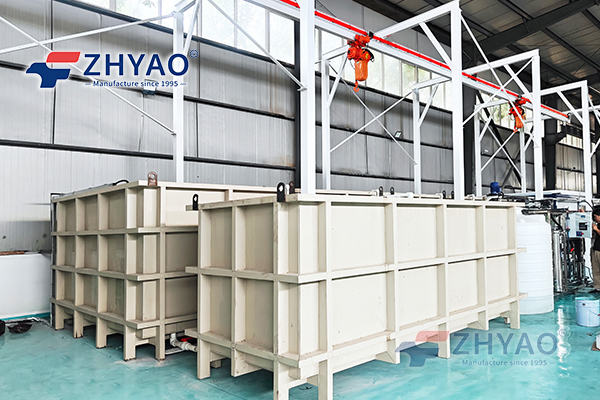 How Does Pretreatment Quality Affect Powder Coating Adhesion?
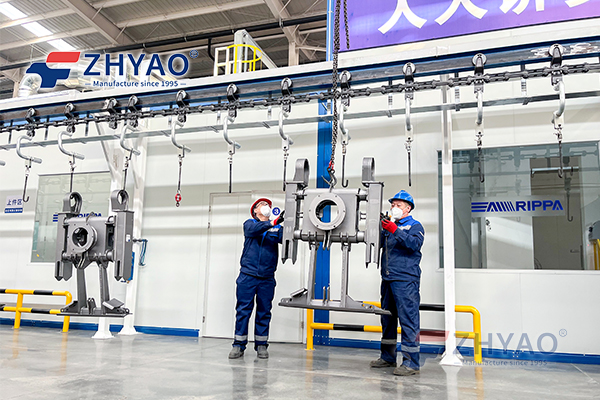 How Does Conveyor Pitch Affect Powder Coating Production?
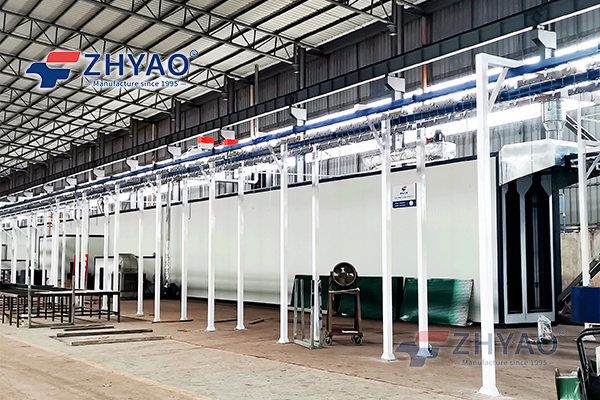 Powder Coating Line with Tunnel Oven