
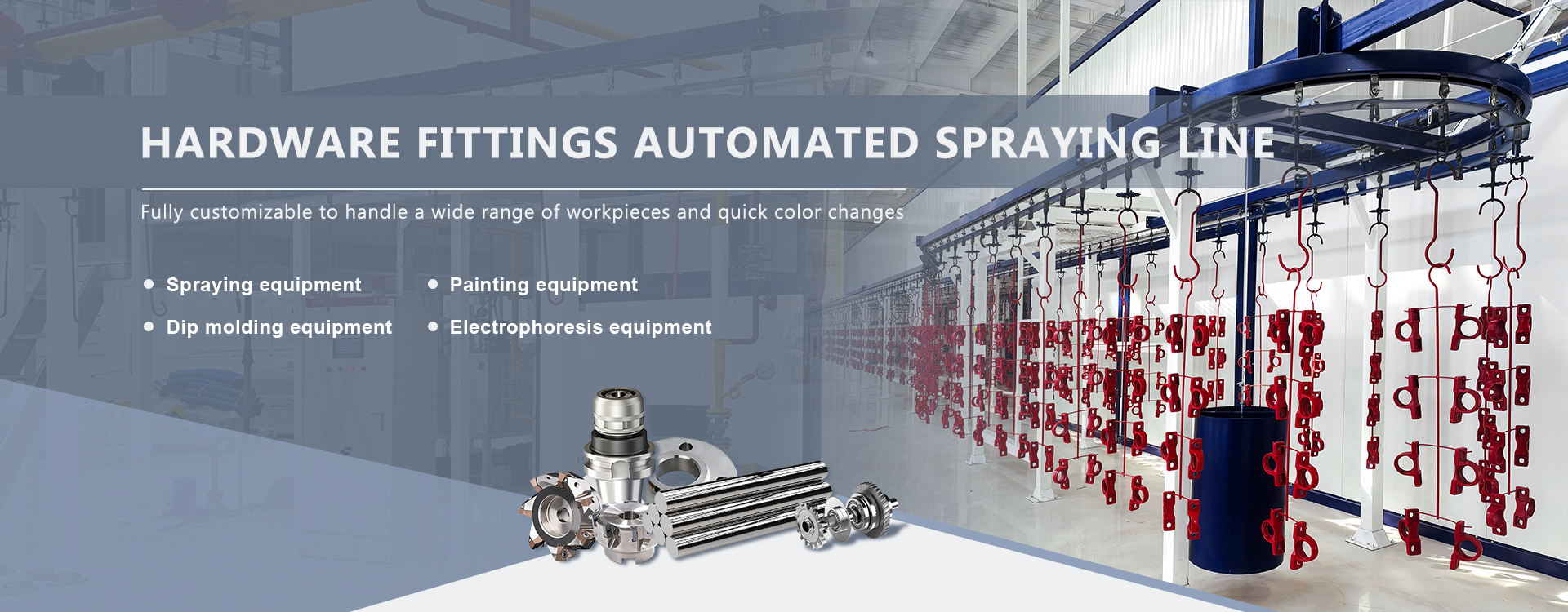
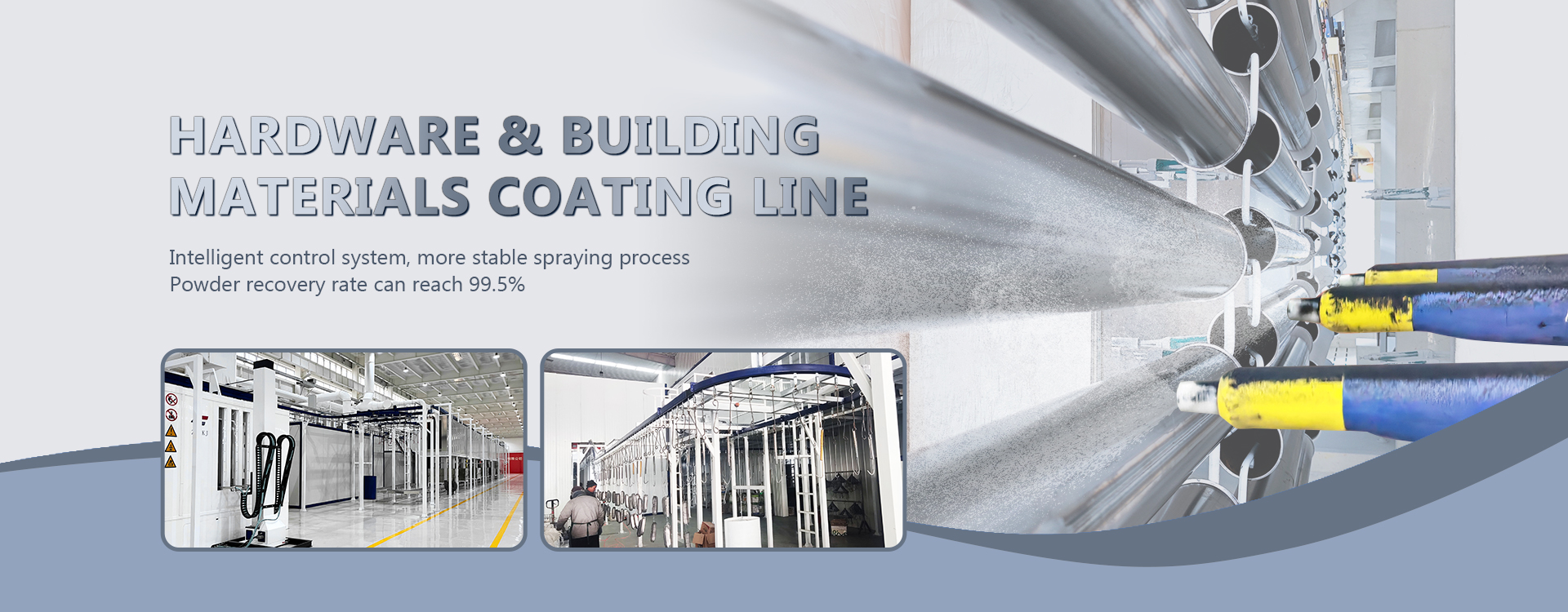
Powder Coating Line with Tunnel Oven
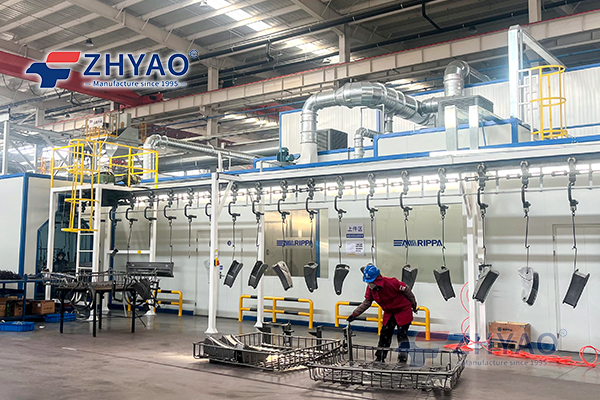
A powder coating line with a tunnel oven is designed for factories that need a continuous coating process rather than separate loading and curing batches.
Workpieces move through pretreatment, drying, powder spraying and curing on the same conveyor, making the tunnel oven an important part of the overall production flow.
The key point is not simply how hot the oven can get. The curing section has to provide the right combination of workpiece temperature, heating time, conveyor speed and airflow. The powder manufacturer's curing schedule should be the starting point when determining these parameters.
How Does a Powder Coating Line with Tunnel Oven Work?
A typical line is arranged as:
Loading → Pretreatment → Drying → Powder Spraying → Powder Recovery → Tunnel Curing Oven → Cooling → Unloading
The conveyor keeps the workpieces moving through each stage at a controlled speed.
After surface pretreatment and drying, powder is applied electrostatically inside the spray booth. The coated parts then enter the tunnel oven, where circulating heated air transfers heat to the metal.
As the workpiece reaches the required temperature, the powder melts, flows and chemically cures to form the finished coating.
Because the parts remain on the conveyor throughout the process, the curing time is closely connected to conveyor speed and the effective heated length of the oven. In simple terms:
Heated Oven Length = Conveyor Speed × Required Heating Time
The actual design also needs to consider the thermal mass of the workpiece, powder formulation, loading pattern and factory layout.
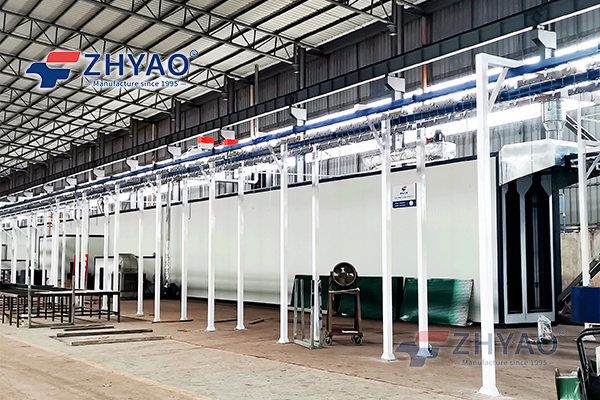
(Guangdong Jinyi Group Curing Oven Project)
Why Use a Tunnel Oven for Powder Coating?
The main difference from a batch curing oven is the way production moves through the heating section.
A batch oven requires parts to be loaded, cured and removed before the next batch begins. A tunnel oven allows parts to enter and leave continuously, which makes it better suited to repetitive production with relatively stable workpiece dimensions.
This can be useful for products such as:
- Metal furniture
- Shelving and storage systems
- Electrical cabinets
- Automotive components
- Metal doors and frames
- Fences and wire products
- Aluminum profiles
- Radiators
- Hardware components
- General fabricated metal parts
For high-volume production, continuous conveying also reduces repeated manual handling between processes.
The Tunnel Oven Is More Than a Heating Chamber
A properly designed powder coating tunnel oven normally includes several systems working together.
Heating System
Gas, diesel or electric heating can be selected according to local energy availability, operating conditions and production requirements. The choice should consider both installation conditions and long-term operating costs.
Hot Air Circulation
Circulation fans distribute heated air around the workpieces. Airflow needs to be balanced so that different areas of the oven do not develop significant temperature differences.
Insulated Oven Body
The oven enclosure uses thermal insulation to limit heat loss and maintain a stable internal temperature. The construction also needs to accommodate thermal expansion during continuous operation.
Temperature Control
Temperature sensors, controllers and heating controls maintain the required oven conditions. For more demanding production, different heating zones can be controlled separately.
Conveyor System
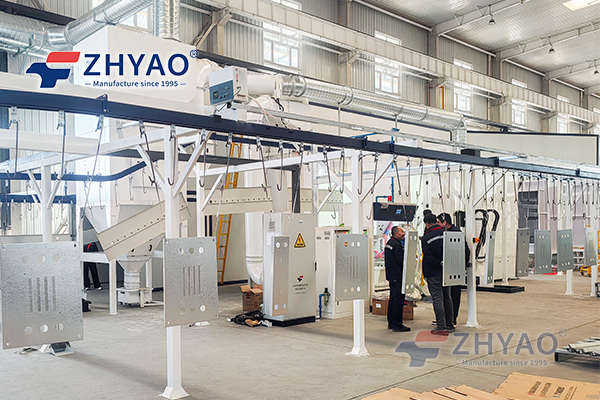
The conveyor connects the entire coating line. Its speed determines how long each workpiece remains in the curing oven, so conveyor design and oven design cannot be treated as separate decisions.
Air Temperature Is Not the Same as Workpiece Temperature
One of the most important points in powder curing is the difference between oven air temperature and the actual temperature of the metal.
A thin sheet-metal part can heat up relatively quickly, while a thick steel casting requires more time to absorb enough heat. Two products passing through the same oven can therefore experience different curing conditions.
For this reason, oven design should be based on the powder manufacturer's specified cure schedule and verified by measuring the actual workpiece temperature when commissioning or adjusting the process.
This becomes particularly important when a factory coats products with significantly different thicknesses or weights on the same production line.
How to Size a Tunnel Curing Oven
There is no standard tunnel oven size that works for every powder coating line.
The main design factors include:
Workpiece size: Determines the internal width and height of the oven and the necessary clearance around the parts.
Workpiece weight: Heavier parts generally require more heat and a longer heating period.
Production output: Required pieces per hour affects conveyor speed and hanging density.
Powder curing schedule: The powder supplier's recommended temperature and time determine the basic thermal requirement.
Conveyor arrangement: Hanger spacing and conveyor speed directly affect oven residence time.
Factory layout: A straight tunnel, U-shaped configuration or other layout may be considered depending on available floor space.
A well-designed system starts with the production requirements and works backward to determine the conveyor and oven specifications, rather than selecting an oven first and trying to fit the rest of the line around it.
Tunnel Oven or Batch Oven?
Neither system is suitable for every factory.
A tunnel oven makes more sense when production is continuous, output is relatively high and product dimensions are reasonably consistent. It works particularly well when the curing process needs to remain synchronized with automatic powder spraying and conveyor movement.
A batch oven offers greater flexibility when products vary substantially in size, production volume is low, or different products require frequent process changes.
The right choice depends on production conditions rather than simply choosing the more automated option.
Designing the Complete Powder Coating Line
The tunnel oven should be considered together with the rest of the coating system.
For example, increasing conveyor speed without extending the curing section can reduce the available curing time. Similarly, a spray booth designed for a different line speed can create a bottleneck before the oven.
A practical design therefore considers:
- Workpiece dimensions and weight
- Required production capacity
- Conveyor speed
- Powder type and curing schedule
- Pretreatment requirements
- Spray booth configuration
- Powder recovery method
- Heating source
- Factory dimensions
- Color-change frequency
- Required automation level
The result should be one coordinated production system rather than a collection of individually selected machines.
ZHYAO Customized Powder Coating Solution
A powder coating line with tunnel oven is normally a non-standard customized system. Oven length, chamber dimensions, heating capacity and conveyor speed need to be calculated according to the customer's actual production requirements.
For preliminary engineering, the most useful information includes:
- Factory dimensions and available installation area
- Workpiece material
- Maximum and minimum workpiece size
- Maximum workpiece weight
- Required daily or hourly output
- Powder type and curing requirements
- Number of colors and expected color changes
- Preferred heating source
- Desired automation level
Based on these conditions, the pretreatment, drying, powder spraying, recovery, conveyor and tunnel curing sections can be designed as one complete line.
FAQ
What is a powder coating line with a tunnel oven?
It is a continuous powder coating system in which workpieces travel through the coating process on a conveyor and enter a tunnel curing oven after powder application. The oven provides the controlled heating needed to cure the powder coating.
How long does a powder coating tunnel oven need to be?
There is no fixed length. It depends on conveyor speed, required curing time, workpiece thermal mass and the powder manufacturer's curing requirements. In basic terms, the heated length is related to conveyor speed multiplied by the required residence time.
Is a tunnel oven suitable for every powder coating factory?
No. Tunnel ovens are generally better for continuous, repetitive production. Factories with low output or highly variable products may find a batch oven more flexible.
What information is needed to design a tunnel powder coating line?
Workpiece size, weight, material, production output, powder curing requirements, color-change frequency and available factory space are among the main inputs required for engineering the line.
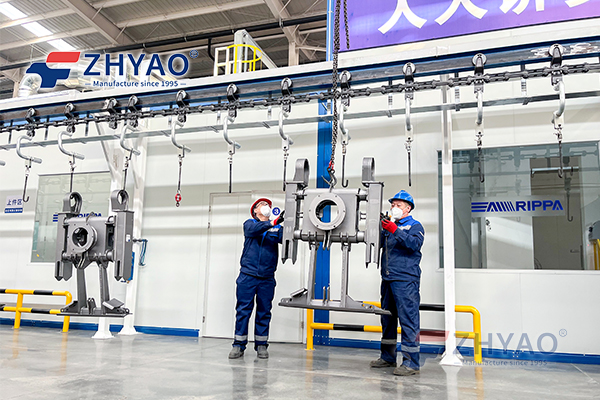 How Does Conveyor Pitch Affect Powder Coating Production?
Powder Coating Line with Tunnel Oven
 Powder Coating Line Cost: What Affects the Investment?
 How Automation Can Reduce Labor Requirements in Powder Coating Production