
How Does Pretreatment Quality Affect Powder Coating Adhesion?
Powder coating adhesion is often discussed in terms of powder type, curing temperature, or spray parameters. However, the condition of the metal surface before powder application can be just as important.
A powder coating does not bond properly to a surface covered with oil, rust, dust, oxides, or other contaminants.
Even when the powder is sprayed evenly and the curing oven operates correctly, poor surface preparation can still lead to weak adhesion, peeling, blistering, or premature coating failure.
For this reason, pretreatment should be considered part of the coating system rather than simply a cleaning step before spraying.
Clean Metal Provides a Better Starting Surface
During fabrication and handling, metal parts can accumulate cutting oil, grease, dust, rust, welding residue, and other contaminants. These materials can interfere with the contact between the coating and the metal substrate.
Pretreatment removes or reduces these contaminants before powder coating. The exact process depends on the material, surface condition, product application, and required corrosion resistance.
A clean surface allows the subsequent chemical treatment or coating system to work more consistently.
Different Metals Need Different Pretreatment Approaches
Steel, galvanized steel, aluminum, and other substrates do not necessarily require the same pretreatment process.
Steel parts may require degreasing, rust removal, phosphating, or another suitable conversion treatment. Aluminum and galvanized surfaces have different chemical characteristics and may require pretreatment chemistry designed for those materials.
Using one pretreatment process for every type of metal without checking compatibility can create inconsistent results. Surface preparation needs to be matched to the substrate rather than selected only according to the coating equipment.
Degreasing Removes More Than Visible Oil
Oil contamination is not always obvious from the appearance of a workpiece. A part may look clean while still carrying a thin layer of oil from stamping, machining, or handling.
If this contamination remains on the surface, it can interfere with the pretreatment reaction and later affect powder coating adhesion.
For this reason, degreasing is an important stage in many pretreatment systems.
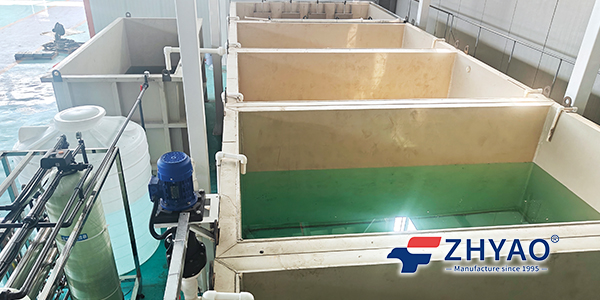
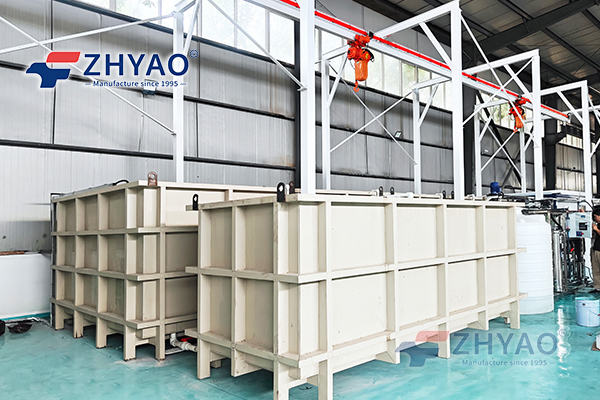
Spray pretreatment can provide continuous chemical cleaning for suitable production volumes, while immersion tank pretreatment offers another approach for products that require soaking and controlled chemical treatment.
Rust and Oxide Layers Must Be Properly Addressed
Rust and oxide layers can create an unstable surface between the metal substrate and the coating.
Light surface contamination may be handled through chemical pretreatment, depending on the substrate and process. Heavier rust, mill scale, welding residue, or molding sand may require mechanical treatment such as shot blasting before coating.
This is particularly relevant for castings and heavily contaminated steel parts.
Applying powder directly over a poorly prepared surface may produce an attractive finish initially, but the coating can have difficulty maintaining adhesion under later mechanical or environmental stress.
Conversion Coatings Help Build the Coating Interface
After cleaning, many metal coating processes use a conversion coating to modify the surface before powder application.
Phosphating is commonly used with steel substrates, while different conversion treatments may be selected for aluminum or galvanized materials. The purpose is not simply to make the surface look cleaner.
The treatment creates a more suitable interface between the metal and the organic coating.
The chemistry, concentration, temperature, treatment time, rinsing, and drying conditions all affect the final surface condition.
Rinsing Quality Can Affect the Next Stage
Pretreatment is a sequence rather than a collection of independent tanks or spray zones.
After chemical treatment, residual chemicals need to be properly removed through rinsing. If rinsing is inadequate, residues can remain on the workpiece and interfere with the coating system.
Water quality can also matter, particularly where a final rinse is required for a specific coating specification. The appropriate rinse arrangement depends on the pretreatment chemistry and the quality requirements of the finished product.
Drying Is Part of Surface Preparation
A workpiece should not enter the powder coating stage with unwanted moisture remaining on the surface.
After spray or immersion pretreatment, the parts normally pass through a drying stage before powder application. Water trapped in corners, seams, profiles, or hollow sections can create problems during subsequent coating and curing.
The drying oven therefore needs to be considered together with the pretreatment process, workpiece geometry, conveyor speed, and production temperature.
Pretreatment Quality Is Visible in Coating Failures
When powder coating adhesion is poor, the first reaction is often to check the powder, spray guns, or curing oven. Those areas are certainly worth checking, but the pretreatment process should also be investigated.
A useful troubleshooting approach is to examine where the coating fails. If the coating peels easily from the substrate, contamination or inadequate surface treatment may be involved.
If the problem occurs only on certain materials or areas of a product, substrate compatibility or local pretreatment coverage may need attention.
Testing should be used rather than relying only on visual inspection.
Pretreatment Coverage Matters on Complex Parts
A simple flat panel is relatively easy to clean and treat. A welded frame, cabinet, fence, pipe structure, or fabricated component may contain corners, joints, recesses, and overlapping areas that are more difficult to reach.
For spray pretreatment, nozzle arrangement, spray pressure, chemical circulation, and workpiece orientation influence coverage. For immersion tank pretreatment, the way the workpiece enters the tank and drains afterward can affect the treatment of difficult areas.
The pretreatment equipment should therefore be designed around the actual workpiece rather than only the production volume.
The Three Common Pretreatment Methods Have Different Roles
For industrial powder coating lines, pretreatment may be designed around spray treatment, immersion tank treatment, or shot blasting.
Spray pretreatment is suitable for continuous processing where the workpiece can be effectively exposed to the treatment stages.
Immersion tank pretreatment is useful when soaking is needed or when the product geometry makes immersion practical.
Shot blasting uses abrasive media to mechanically remove scale, rust, sand, and other surface contaminants. It can be particularly useful for castings and heavily scaled steel components where chemical cleaning alone is not sufficient.
In some projects, mechanical treatment and chemical pretreatment may also be combined.
Good Adhesion Depends on the Complete Process
Pretreatment alone does not guarantee strong powder coating adhesion. Powder selection, electrostatic spraying, coating thickness, curing conditions, substrate temperature, and handling after curing also influence the finished coating.
However, pretreatment establishes the condition of the surface on which all later steps depend. If the interface between the metal and coating is compromised at the beginning, adjustments later in the process may not fully solve the problem.
That is why pretreatment should be evaluated as part of the complete powder coating process.
How to Improve Pretreatment Consistency
A stable pretreatment process requires more than selecting the correct chemical.
The production team needs to monitor chemical concentration, bath or spray temperature, treatment time, rinsing condition, and drying performance according to the selected process. Regular inspection can help identify changes before they become widespread coating defects.
For a new powder coating line, these parameters should be considered when selecting pretreatment equipment. For an existing line, coating adhesion problems may justify reviewing the entire pretreatment sequence rather than simply increasing spray time or changing powder settings.
The Right Pretreatment Starts With the Product
There is no single pretreatment configuration that fits every powder coating application.
The correct process depends on the substrate, surface contamination, workpiece dimensions, production volume, required corrosion resistance, powder coating system, and customer requirements.
A well-designed pretreatment system gives the powder coating a stable surface to bond with and helps reduce problems that may otherwise appear later as peeling, blistering, corrosion under the coating, or inconsistent finish quality.
For manufacturers planning a powder coating line, pretreatment should therefore be designed at the same time as the spray booth, curing oven, conveyor, and other major process sections.
Frequently Asked Questions
- Can poor pretreatment cause powder coating to peel?
Yes. Oil, rust, scale, dust, chemical residues, or inadequate surface treatment can weaken the interface between the metal and powder coating, increasing the risk of peeling or other adhesion problems.
- Which pretreatment method is suitable for a powder coating line?
It depends on the metal substrate, surface condition, workpiece shape, production volume, and coating requirements. Spray pretreatment, immersion tank pretreatment, and shot blasting are commonly used, and some applications may combine more than one method.
 Automatic vs Manual Powder Coating Line
 How Does Pretreatment Quality Affect Powder Coating Adhesion?
 How Does Conveyor Pitch Affect Powder Coating Production?
 Powder Coating Line with Tunnel Oven