
How to Design a Powder Coating Line for Your Factory?
Overview
Designing a powder coating line for a factory is not just about selecting equipment, but about building a complete production system based on process flow, factory layout, and operational requirements. A well-designed system ensures stable coating quality, efficient material handling, and long-term production reliability, while poor design often leads to bottlenecks, inconsistent coating results, and increased operating costs.
1. Define Production Requirements First
The design process always starts with a clear understanding of production needs, including product type, size and weight, required coating quality, production capacity, and available factory space. These factors directly determine system configuration, conveyor type, and automation level, and without this step, the design may not match actual production conditions.
2. Plan the Process Flow as the Core Structure
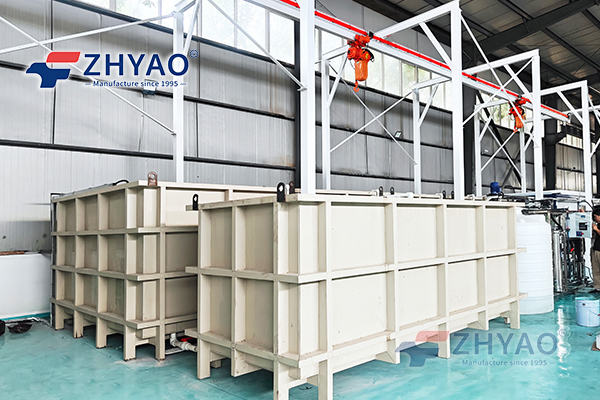
A powder coating line must follow a continuous and logical process flow: pretreatment → drying → powder coating → curing → cooling. Each stage needs to be smoothly connected to avoid delays, rework, or quality issues, and the layout should minimize unnecessary movement while maintaining a stable production rhythm.
3. Choose the Right Layout Based on Factory Conditions
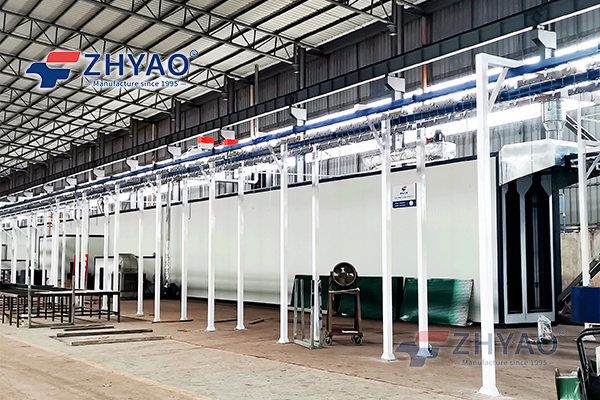
Factory layout plays a critical role in system design, and common layouts include straight-line, U-shaped, and compact or modular configurations. Proper layout planning can reduce material handling time, improve workflow efficiency, and ensure better coordination between different process stages.
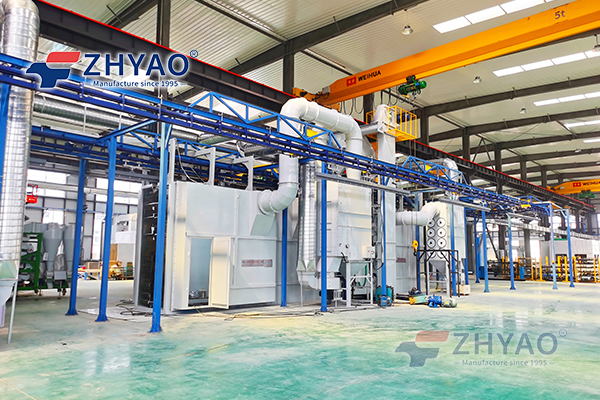
(Powder coating lines )
4. Select the Appropriate Automation Level
Powder coating lines can be designed with different automation levels depending on production requirements, ranging from manual systems for flexible production to fully automatic systems for high-volume continuous operation. Higher automation levels improve process consistency, reduce dependence on manual operation, and enhance overall production stability.
5. Design the Conveyor System Carefully
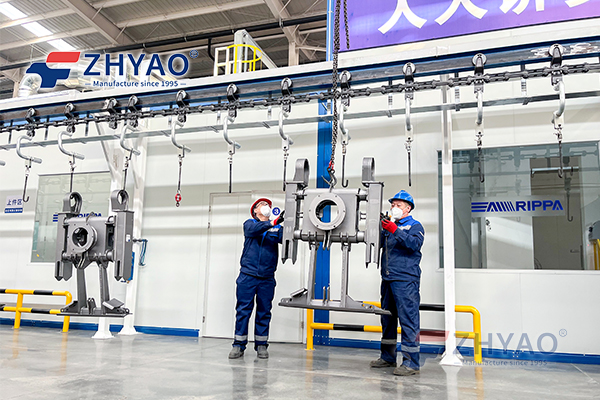
The conveyor system connects all process stages and defines the production rhythm of the entire line. Key considerations include load capacity, conveyor speed, layout path, and compatibility with different product types. An improperly designed conveyor system can lead to synchronization issues and reduce overall efficiency.
6. Optimize Space Utilization and Maintenance Access
A good powder coating line design must balance space utilization with maintenance accessibility. It is important to ensure sufficient space between equipment, proper maintenance access for all components, and safe working paths for operators. Efficient space planning improves both daily operation and long-term maintenance efficiency.
7. Consider Energy Efficiency and Environmental Factors
Modern powder coating line design must include considerations for energy efficiency and environmental performance, such as heating efficiency, powder recovery systems, airflow control, and emission management. These factors directly impact operating costs and compliance with environmental regulations.
8. System Integration and Testing
A complete powder coating line must be tested as an integrated system before full operation. This includes synchronization of all equipment, adjustment of process parameters, and testing under real production conditions to ensure stable and reliable performance.
Conclusion
Designing a powder coating line for a factory requires a system-level approach that integrates process flow, layout planning, equipment selection, and operational considerations. A well-designed system improves production efficiency, ensures consistent coating quality, and supports long-term stable operation.
Looking for a suitable solution for your powder coating production line? Contact us to discuss your project requirements.
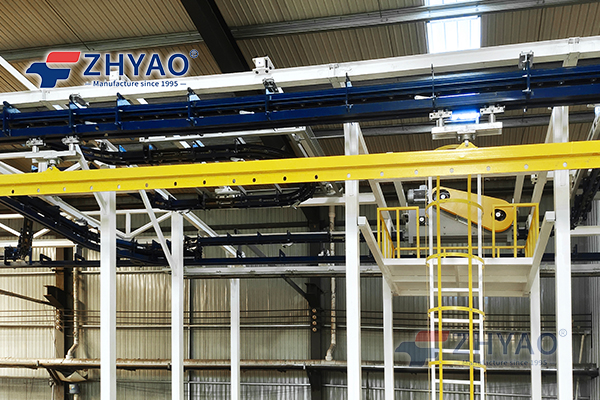 Automatic vs Manual Powder Coating Line
 How Does Pretreatment Quality Affect Powder Coating Adhesion?
 How Does Conveyor Pitch Affect Powder Coating Production?
 Powder Coating Line with Tunnel Oven