
Batch Oven vs. Continuous Oven: How to Choose the Right Curing System for Your Production Needs
Choosing between a batch oven and a continuous oven depends on how your factory produces and coats its products. A batch oven processes a group of workpieces in one cycle, while a continuous oven moves products through a defined heating process as production continues.
Neither system is universally better. A batch oven may be more practical for manufacturers handling different products in small quantities, while a continuous oven can support a stable production flow when output is high and workpieces follow repeatable processing requirements.
The important decision is not simply which oven offers higher capacity, but which system matches the product range, required curing conditions, and production schedule.
1. The Main Difference Is How Workpieces Move Through the Curing Process
A batch curing oven heats a group of workpieces together. Operators load the parts, run the specified heating cycle, and remove them when the process is complete. The next batch can then be processed.
This arrangement allows different products to be handled in separate cycles, provided the oven can accommodate their dimensions and the required process conditions.
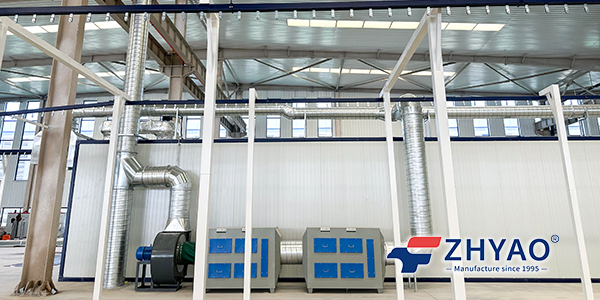
A continuous curing oven, by contrast, is usually integrated with a conveyor system. Workpieces enter the oven, travel through the heating zone, and exit after a defined residence time. The oven can process successive workpieces without stopping for a complete load-and-unload cycle.
The difference affects more than equipment operation. It influences material handling, production scheduling, factory layout, labor requirements, and how easily different products can be accommodated.
2. When Is a Batch Oven the Better Choice?
Batch ovens are often suitable for manufacturers whose production schedules involve varied products, small batches, or irregular order volumes.
Frequent product changes
A factory may coat steel cabinets, machine components, metal frames, and other products with different dimensions and curing requirements. Processing products in separate batches can make it easier to organize production around individual orders.
However, products processed in the same batch must still be compatible with the oven's operating conditions. Different coating specifications or workpiece heating characteristics may require separate cycles.
Large or heavy workpieces
Batch ovens can be designed for large structures, heavy components, and products that are difficult to accommodate on a conventional conveyor. The loading method may involve floor rails, carts, overhead handling, or other arrangements suited to the workpiece.
The oven must still provide sufficient space, heating capacity, and airflow for the intended load.
Unpredictable production demand
When orders arrive irregularly, a batch oven allows the factory to run curing cycles when enough workpieces are ready. It does not require the same continuous flow of products as a conveyorized system.
This can be advantageous for manufacturers that cannot maintain a consistent production rate throughout the day.
The main limitation is that each cycle requires loading, heating, curing, and unloading. If output increases substantially, these repeated operations may become a production bottleneck.
3. When Does a Continuous Oven Make More Sense?
A continuous oven is generally more attractive when products are processed regularly and the factory needs a coordinated production flow.
Stable, high-volume production
Manufacturers producing similar products in repeated sequences can benefit from continuous movement through the curing process. Once the line is operating steadily, successive workpieces can enter the oven without waiting for a complete batch cycle.
The actual output depends on conveyor speed, workpiece spacing, loading efficiency, and the curing requirements of the products.
Integration with an automatic coating line
In an automated painting or powder coating line, the curing oven often forms part of a sequence involving pretreatment, drying, spraying, and material handling.
A continuous oven can help coordinate these stages by maintaining a defined flow of workpieces through the system. This reduces the need for repeated transfers between separate processing areas.
However, integration only improves overall productivity when the connected equipment has compatible capacities. A fast conveyor cannot compensate for a spray booth or pretreatment stage that cannot support the required output.
Reduced repeated handling
When workpieces can remain on the conveyor throughout the process, operators may spend less time moving products between separate curing cycles. This can simplify material handling and reduce interruptions associated with batch loading.
The trade-off is that continuous systems generally require more careful planning of conveyor routing, workpiece spacing, and production scheduling. Frequent product changes or extended interruptions can reduce the benefits of continuous operation.
4. Curing Requirements Matter More Than the Oven Type
Both batch and continuous ovens must achieve the required curing conditions for the coating being applied.
For powder coating, the powder manufacturer's specified curing schedule commonly relates to the temperature reached by the workpiece and the time maintained at the required conditions. The oven's air temperature alone does not establish whether the coating has been properly cured.
Large, thick, or heavy parts may heat more slowly than thin components. If the heating profile is not properly considered, a workpiece may spend too little time at the required temperature even when the oven display shows the expected setting.
A batch oven allows the operator to adjust the cycle for different loads, but the cycle must be validated for the actual workpieces.
A continuous oven provides a defined residence time based on the heated path length and conveyor speed. If the required curing schedule changes, the operating speed, heating arrangement, or effective oven length may need to be reviewed.
For liquid painting applications, the appropriate drying or curing conditions depend on the coating chemistry and process specification. Not every painted product requires the same temperature or treatment time.
The correct oven choice must therefore begin with the coating process and workpiece requirements, rather than assuming that one oven type inherently provides better curing quality.
5. Compare Total Operating Requirements, Not Just Equipment Price
The initial cost of an oven is only one part of the investment decision.
A batch oven may require less integration with a continuous conveyor system, particularly when production volumes are modest. However, repeated loading and unloading can increase labor requirements, and the oven may spend time waiting between cycles.
A continuous oven may support higher throughput and reduce repeated handling, but it can require additional conveyor equipment, more complex integration, and a layout that accommodates continuous material movement.
Energy consumption also depends on the specific design and operating conditions. Factors include oven insulation, heating method, operating temperature, exhaust requirements, door-opening frequency, loading patterns, and production utilization.
A batch oven that is carefully loaded and operated in well-planned cycles may be economical for intermittent demand. A continuous oven may make better use of its installed capacity when production remains stable for long periods.
Neither system should be assumed to consume less energy in every situation. Compare energy use against actual production output under realistic operating conditions.
6. How Workpiece Dimensions Affect the Decision
Product size influences both oven configuration and the way workpieces are transported.
For long profiles, large frames, or heavy industrial components, the factory must consider available building space, loading access, support arrangements, and the distance required for the workpiece to reach the target temperature.
A continuous oven may be suitable for long products if they can be conveyed safely and consistently through the heating zone. However, the conveyor, oven opening, and internal clearance must accommodate the largest workpieces.
A batch oven may offer greater flexibility for irregularly shaped components or products that are difficult to hang on a continuous conveyor. Yet large batch loads can create their own challenges: tightly packed workpieces may restrict airflow and heat unevenly.
The key is to evaluate the largest and most thermally demanding products, not only the average workpiece.
7. A Practical Way to Choose Between Batch and Continuous Ovens
Before requesting a quotation, review the following production conditions.
Choose a batch oven as the starting point when:
Production is low-volume, intermittent, or order-based.
The product range changes frequently.
Workpieces are large, heavy, or difficult to convey continuously.
Separate curing cycles provide useful production flexibility.
Consider a continuous oven when:
Production demand is relatively stable.
Workpieces can move through the process in a repeatable sequence.
The oven must integrate with a conveyorized coating line.
Required throughput justifies continuous operation and system integration.
For some factories, both systems may be appropriate for different product groups. A continuous line can handle standard, high-volume products, while a batch oven processes oversized components, special orders, or products with different curing requirements.
The final decision should be based on expected production volume, product dimensions, curing schedules, labor arrangements, available space, and the cost of operating the system over its useful life.
FAQ
1. Is a continuous curing oven always faster than a batch oven?
Not necessarily. A continuous oven can maintain a steady flow of products, but its actual throughput depends on conveyor speed, workpiece spacing, and curing requirements. A batch oven may be sufficient or more efficient for low-volume production or large workpieces that require separate processing cycles.
2. Can a batch oven and a continuous oven both be used for powder coating and liquid painting?
Yes, depending on the coating chemistry, required temperature profile, equipment design, and process specification. The oven must be designed for the intended application, and curing conditions must be validated for the actual coating and workpieces.
 Powder Coating vs Liquid Painting: Which Process Is Better for Your Product?
 Batch Oven vs. Continuous Oven: How to Choose the Right Curing System for Your Production Needs
 How Production Requirements Shape Powder Coating Line Design
 Automatic vs Manual Powder Coating Line