
Why Equipment Parameters Matter More Than Price in Electrostatic Powder Coating Line Selection?
Introduction
When selecting an electrostatic powder coating line, many buyers initially focus on price. However, in practical industrial applications, long-term coating quality, production stability, and operating efficiency are determined far more by technical parameters than by initial equipment cost.
Understanding which parameters truly affect performance helps manufacturers avoid mismatched systems, reduce process risks, and achieve predictable coating results across different products and production volumes.
Key Parameters That Directly Influence Coating Performance
Voltage and Current Control Capability
Electrostatic powder coating relies on controlled electrical fields. Equipment with stable and adjustable voltage and current output allows operators to adapt to:
Different workpiece sizes and geometries
Variations in coating thickness requirements
Changes in powder characteristics
Insufficient control accuracy may lead to inconsistent deposition, especially on complex or recessed parts.
2. Spray Gun Configuration and Control System
The number of spray guns, their arrangement, and the level of automation directly affect coating consistency.
Critical considerations include:
Manual vs. automatic spray guns
Reciprocator stroke range and speed control
Programmable spray paths for repeatability
Well-configured spray systems reduce operator dependency and improve coating uniformity over long production cycles.
3. Powder Recovery and Airflow Design
Powder recovery efficiency depends on booth airflow stability and separation systems.
Proper airflow design helps to:
Maintain consistent powder concentration in the booth
Reduce overspray accumulation on workpieces
Support stable powder transport to spray zones
Efficient recovery systems also contribute to cleaner operation and easier color change management, without making assumptions about recovery percentages beyond system design intent.
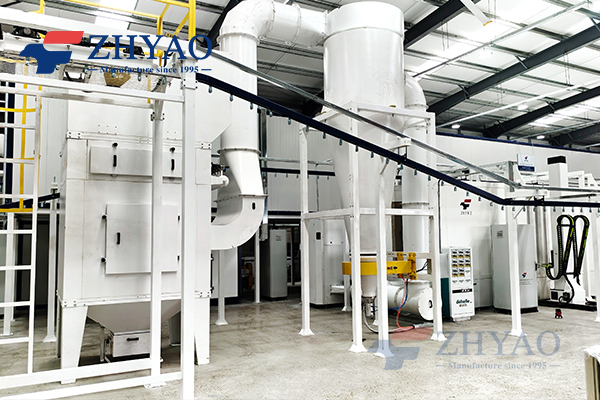
(powder spraying equipment)
4. Line Speed and Process Matching
A powder coating line must match upstream and downstream processes, including pre-treatment, curing, and cooling.
Key matching parameters include:
Conveyor speed range
Oven temperature stability and curing time control
Buffer zones between process stages
If line speed and curing conditions are mismatched, coating defects may occur even if individual components perform well.
5. Adaptability to Product Variation
In many industries, product dimensions, shapes, and production volumes change over time.
Equipment designed with adjustable parameters allows manufacturers to:
Introduce new products without major line modifications
Adjust coating thickness or appearance requirements
Maintain process stability under variable loads
This adaptability is often more valuable than short-term cost savings.
Why Price Alone Is Not a Reliable Decision Factor
While initial investment cost is measurable, performance limitations caused by unsuitable parameters often appear later during production.
Common long-term consequences include:
Increased rework due to coating inconsistency
Higher process adjustment time
Reduced line utilization efficiency
These factors affect operating cost and delivery reliability, even if the initial purchase price is lower.
Conclusion
In electrostatic powder coating line selection, technical parameters define real production capability. Voltage control accuracy, spray system configuration, airflow design, line speed matching, and adaptability to product variation all have a direct and measurable impact on coating performance.
Evaluating these parameters helps manufacturers make informed decisions that support stable operation and consistent coating quality over the full service life of the equipment.
 Batch Oven vs. Continuous Oven: How to Choose the Right Curing System for Your Production Needs
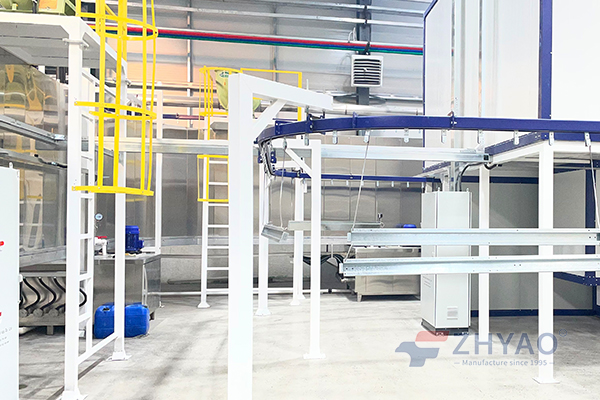 How Production Requirements Shape Powder Coating Line Design
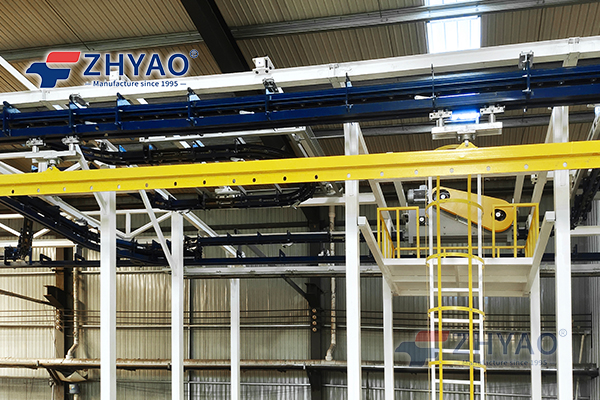 Automatic vs Manual Powder Coating Line
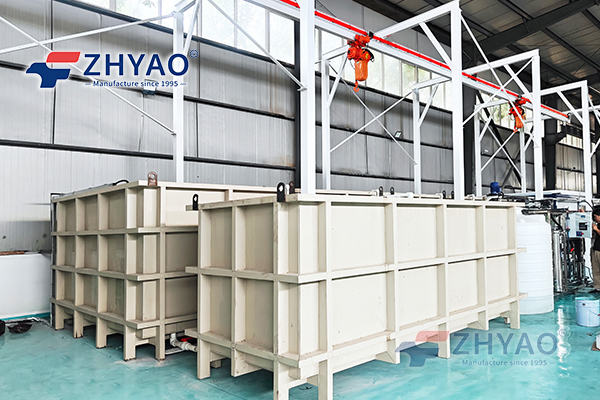 How Does Pretreatment Quality Affect Powder Coating Adhesion?