
What Is the Principle of Powder Coating Process?
Introduction
Powder coating is a widely used industrial surface finishing process that applies dry powder to metal surfaces and forms a durable protective layer after curing. Compared with traditional liquid painting, it does not rely on solvents, which makes it more efficient and environmentally friendly in many industrial applications.
Understanding the principle behind the powder coating process is essential for optimizing coating quality, improving production efficiency, and selecting the right automatic painting line configuration.
Basic Principle of Powder Coating Process
The principle of powder coating is based on electrostatic attraction and thermal curing. The entire process can be summarized in three key physical stages:
(1) Electrostatic Charging and Powder Application
Powder particles are charged inside a spray gun through a high-voltage electrostatic field. At the same time, the grounded metal workpiece attracts these charged particles.
This creates a uniform adhesion of powder onto the surface.
(2) Powder Deposition on Metal Surface
Once sprayed, the powder particles remain loosely attached to the workpiece due to electrostatic force. At this stage, the coating is not yet solid and can still be affected by airflow or vibration.
(3) Thermal Curing and Film Formation
The coated workpiece is transferred into a curing oven. Under controlled temperature, the powder melts, flows, and chemically reacts to form a continuous and solid coating film.
This step determines the final coating strength, hardness, and appearance.
Key Scientific Mechanisms Behind the Process
The powder coating process is driven by several engineering principles:
Electrostatic Force
Opposite charges between powder and metal surface create strong attraction, improving transfer efficiency and reducing overspray.
Heat-Induced Polymerization
In the curing stage, powder particles undergo melting and cross-linking reactions, forming a stable polymer coating layer.
Fluid Flow Behavior
When heated, the powder transitions into a viscous liquid state, allowing it to level and form a smooth surface.
Role of Each Stage in an Automatic Painting Line
In an industrial automatic painting line, the process is divided into continuous systems:
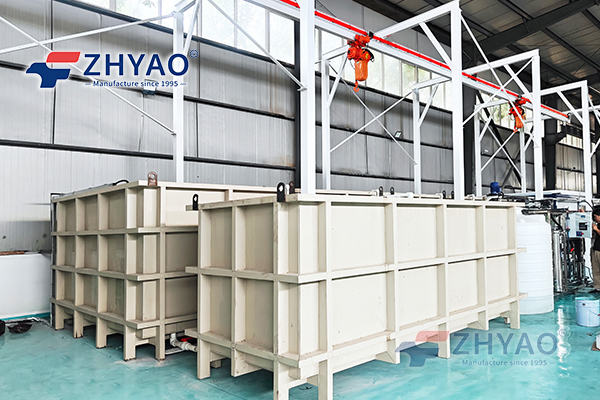
Pretreatment system: removes oil, rust, and contaminants
Spray booth: applies electrostatic powder coating
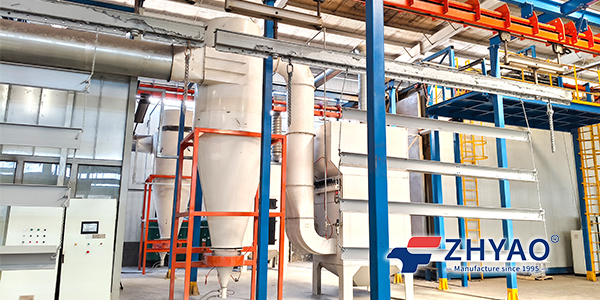
Recovery system: collects unused powder for reuse
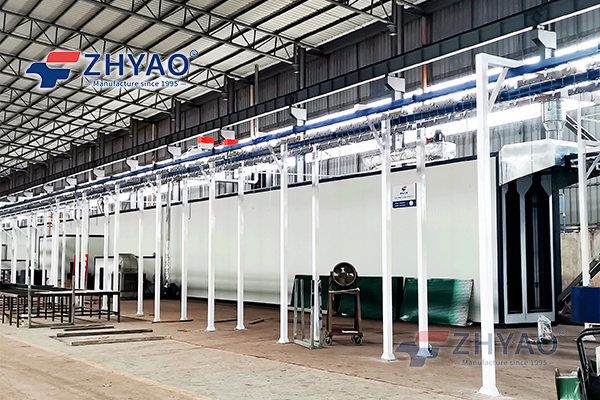
Curing oven: completes film formation through heat
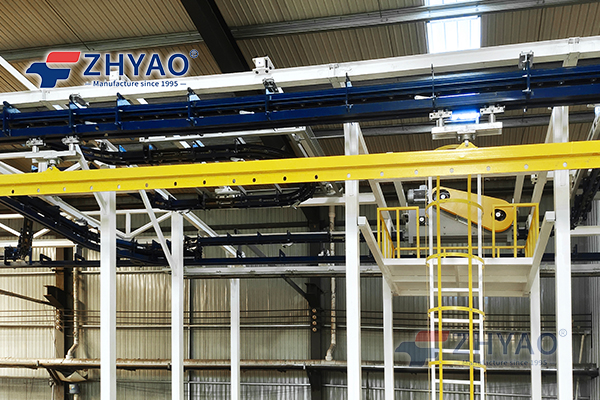
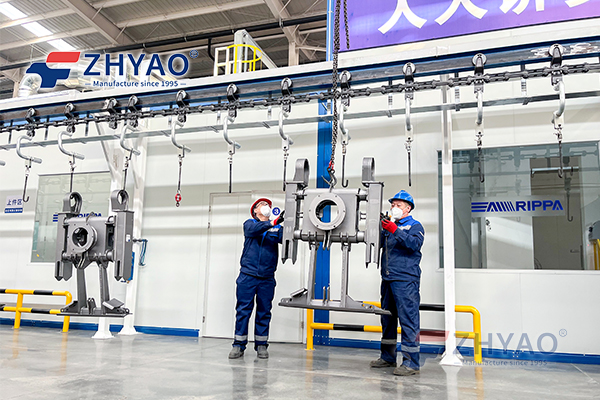
Conveyor system: transports workpieces through each stage
Each subsystem directly affects coating consistency and production efficiency.
Factors That Influence the Coating Principle in Practice
Although the principle is stable, actual results depend on several parameters:
Electrostatic voltage level
Powder particle size and quality
Grounding condition of workpiece
Spray distance and gun angle
Curing temperature and time
Airflow design in spray booth
Improper control of these factors may lead to uneven coating, poor adhesion, or surface defects.
Why This Process Is Widely Used in Industry
The powder coating principle supports modern manufacturing needs because it:
Produces a strong and durable coating layer
Reduces volatile organic compound (VOC) emissions
Improves material utilization efficiency
Enables automation in continuous production lines
For this reason, it is widely applied in automotive parts, aluminum profiles, steel structures, and industrial equipment manufacturing.
Conclusion
The principle of powder coating is based on electrostatic deposition and thermal curing, forming a stable and protective film on metal surfaces. In an automatic painting line, this process is integrated into a continuous system that ensures stable quality and efficient production.
Understanding this principle helps in selecting proper equipment configuration and optimizing coating performance in industrial applications.
 Automatic vs Manual Powder Coating Line
 How Does Pretreatment Quality Affect Powder Coating Adhesion?
 How Does Conveyor Pitch Affect Powder Coating Production?
 Powder Coating Line with Tunnel Oven