
What Are the Main Parts of Painting Line System?
Understanding the main parts of a painting line system is essential for designing, operating, or optimizing an industrial coating production line. A complete painting line system integrates pretreatment, conveying, spraying, curing, and control systems to achieve continuous and stable surface finishing performance in industrial manufacturing.
1. Pretreatment System (Surface Cleaning System)
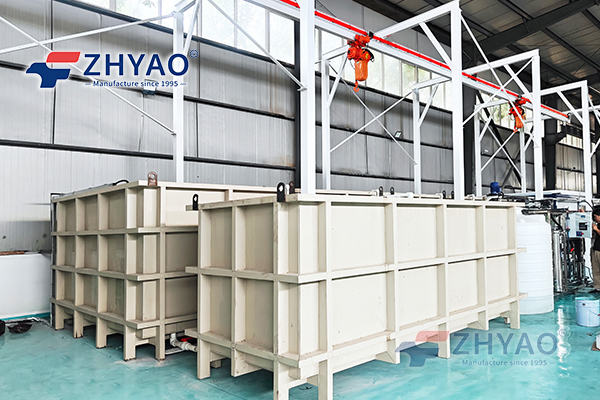
The pretreatment system is the first and one of the most critical parts of a painting line system. Its main function is to remove contaminants such as oil, dust, rust, and oxide layers from the workpiece surface.
A typical pretreatment section may include:
Degreasing tank or spray degreasing unit
Water rinsing stages
Surface conditioning stage
Phosphating or chemical conversion coating
Drying oven
Proper pretreatment improves coating adhesion and corrosion resistance. If this stage is unstable, it will directly affect final coating quality.
2. Conveyor System (Material Handling System)
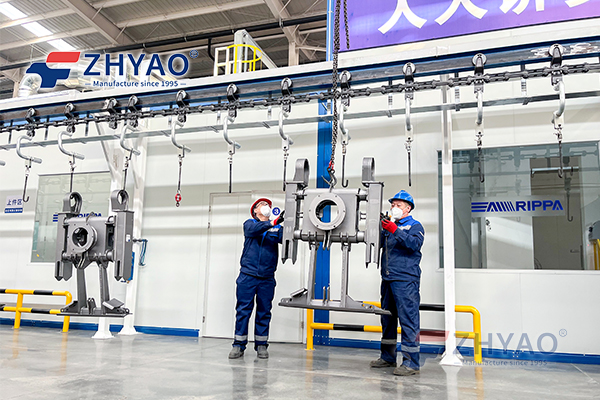
The conveyor system is responsible for transporting workpieces through each stage of the painting line in a continuous and controlled manner.
Common conveyor types include:
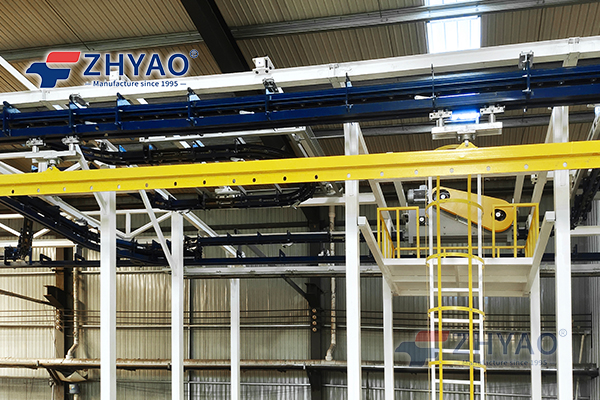
Overhead chain conveyor
Power and free conveyor
Belt conveyor (for light parts)
The conveyor speed is closely linked with process timing, such as spraying duration and curing time. A well-designed conveyor system ensures production stability and consistent coating results.
3. Spray Coating System (Application System)
The spray system is where coating material is applied to the workpiece surface. Depending on the technology used, it can be divided into powder coating or liquid painting systems.
Key components include:
Spray booths
Automatic spray guns or robotic spray arms
Powder supply system or paint supply system
Electrostatic control units (for powder coating)
This stage determines coating thickness, uniformity, and appearance quality. Modern systems often use programmable control to improve consistency and reduce manual variation.
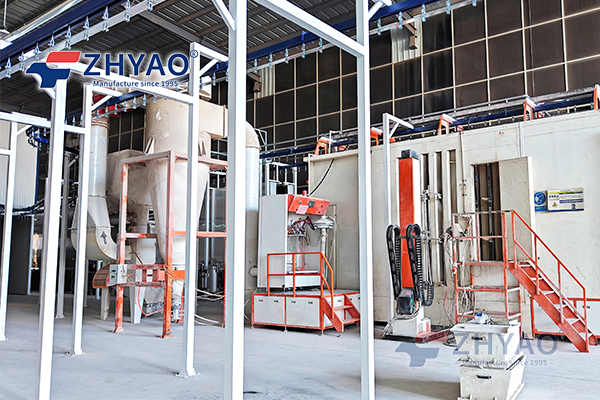
4. Powder Recovery or Air Exhaust System
In powder coating lines, a recovery system is used to collect oversprayed powder for reuse. This helps improve material efficiency and reduce operational cost.
Typical recovery systems include:
Cyclone recovery system
Cartridge filter recovery system
Multi-stage filtration units
In liquid painting systems, an exhaust and air purification system is used to manage overspray mist and volatile emissions, ensuring a cleaner working environment.
5. Curing Oven System (Drying and Baking System)
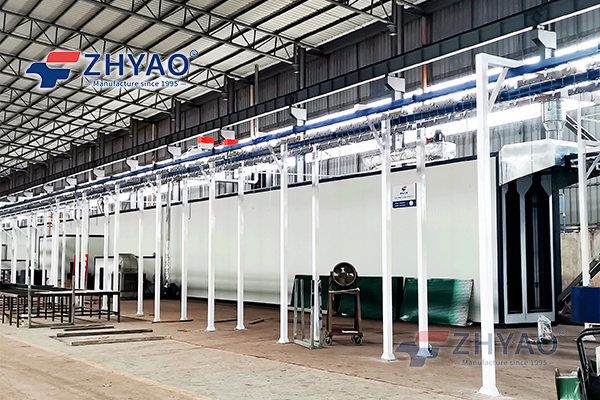
The curing oven is responsible for transforming the coated layer into a solid and durable film through controlled heating.
Main functions include:
Melting powder particles
Promoting chemical cross-linking
Forming a uniform coating layer
Common heating methods:
Electric heating
Gas heating
Infrared or hybrid heating systems
Key parameters such as temperature uniformity, heating time, and airflow circulation directly affect coating hardness, gloss, and durability.
6. Cooling System
After curing, the workpieces pass through a cooling zone before unloading. This step stabilizes the coating layer and reduces deformation or surface damage during handling.
Cooling methods may include natural cooling or forced air cooling systems depending on production requirements.
7. Electrical Control System (Automation System)
The electrical control system is the “brain” of the entire painting line system. It coordinates all equipment to ensure synchronized and stable operation.
It typically includes:
PLC control system
Human-machine interface (HMI)
Temperature and speed monitoring
Alarm and safety systems
Process parameter programming
Automation improves repeatability and reduces dependency on manual operation.
8. Waste Gas Treatment System (Environmental System)
For liquid painting or certain pretreatment processes, waste gas treatment is necessary to meet environmental standards.
Common technologies include:
Activated carbon adsorption
Wet scrubbing systems
Thermal oxidation systems (in some industrial setups)
This system helps reduce emissions and maintain compliance with environmental requirements.
Conclusion
A complete painting line system consists of multiple integrated subsystems, including pretreatment, conveying, spraying, recovery, curing, cooling, control, and environmental treatment systems. Each part plays a specific role in ensuring coating quality, production efficiency, and system stability.
Understanding these components helps manufacturers design better production lines and optimize industrial coating processes.
 Automatic vs Manual Powder Coating Line
 How Does Pretreatment Quality Affect Powder Coating Adhesion?
 How Does Conveyor Pitch Affect Powder Coating Production?
 Powder Coating Line with Tunnel Oven