
Electrical Control Systems in Coating Lines: How Equipment Coordination Affects Production
An industrial coating line may contain conveyors, pretreatment equipment, spray booths, curing ovens, exhaust systems, and multiple auxiliary devices. Each unit can operate independently, but the production line only works efficiently when these units operate in the correct sequence.
This is where the electrical control system becomes important. It coordinates equipment operation, monitors operating conditions, manages interlocks, and helps operators identify abnormal situations.
A well-designed control system does more than automate individual machines. It ensures that the coating process and material handling remain coordinated as production conditions change.
The Control System Must Follow the Coating Process
Different coating lines require different control strategies. A powder coating line, a liquid painting line, and an electrophoretic coating line do not have identical process requirements.
For example, a powder coating line may need to coordinate conveyor movement, spray gun operation, booth extraction, powder supply, and curing oven operation. A liquid painting line may also require control of ventilation, paint delivery, and drying conditions. An electrophoretic coating line may need additional controls for bath circulation, temperature, electrical rectification, and related pretreatment or rinsing processes.
The control system should therefore be designed around the actual process sequence rather than using a generic automation configuration for every line.
The first step is to define which equipment must operate together, which conditions must be satisfied before a process can start, and what should happen when a fault occurs.
Conveyor Control Determines How Equipment Works Together
The conveying system connects the different stages of a coating line. Its control strategy directly affects production rhythm and equipment coordination.
In a continuous line, conveyor speed influences the time workpieces spend in pretreatment, spraying, and curing areas. The control system must coordinate conveyor operation with the operating requirements of these stations.
If the conveyor stops unexpectedly, the response depends on the process and equipment design. Spray guns may need to stop automatically, and the curing process may require an appropriate response to prevent workpieces from remaining in an unsuitable temperature condition.
Accumulation conveyors and independently controlled sections require additional coordination. The system must determine when sections can run, stop, release workpieces, or wait for downstream equipment.
These functions are not simply about starting and stopping motors. They help prevent one equipment fault from creating problems throughout the production line.
Spraying and Pretreatment Need Appropriate Interlocks
Automatic spraying equipment depends on more than a start command. Spray operation may need to be permitted only when the required conditions are satisfied.
Depending on the line design, these conditions can include booth ventilation status, conveyor movement, equipment readiness, and the availability of the relevant powder or paint supply. If a required condition is lost, the control system should respond according to the defined operating and safety logic.
Pretreatment equipment also requires coordination. Pumps, heating equipment, circulation systems, and other devices may need to operate in a defined sequence. Where workpiece tracking is used, the control system can coordinate the movement of products through different treatment stages.
The specific interlocks should reflect the process risks and equipment design. Not every coating line requires the same signals or control sequence, and unnecessary interlocks can make operation and troubleshooting more complicated.
Curing Oven Control Must Account for Actual Process Conditions
A curing oven requires coordinated control of heating, temperature monitoring, conveyor movement, and relevant ventilation or combustion functions.
The control system typically monitors selected temperatures and regulates heating according to the oven design. Gas-fired ovens also require appropriate burner-management and safety functions, while electric ovens require suitable control and protection for their heating circuits.
However, the oven's displayed temperature does not necessarily represent the temperature experienced by the workpiece. Part mass, geometry, loading density, and conveyor speed influence the actual heating profile.
For powder coating, the workpiece must reach the temperature and time conditions required by the powder formulation. A control system can regulate the oven and record process conditions, but it cannot compensate automatically for every unsuitable loading arrangement or process specification.
For this reason, oven control should be considered together with process validation, temperature profiling, and the manufacturer's curing recommendations.
PLC, HMI, and Sensors Serve Different Purposes
The electrical control architecture depends on the complexity of the coating line.
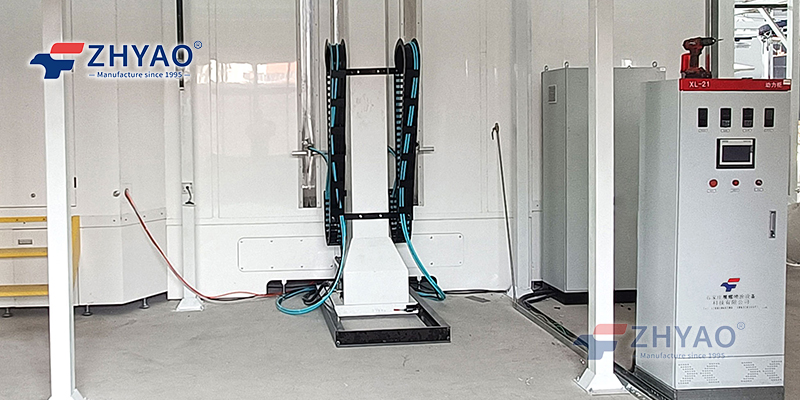
A programmable logic controller (PLC) executes control sequences, processes input signals, and coordinates equipment according to the programmed logic. It can manage conveyor operation, equipment interlocks, alarms, and automatic operating sequences.
A human-machine interface (HMI) allows operators to view equipment status, select permitted operating modes, adjust authorized settings, and review alarms. A well-organized HMI makes it easier to understand what the line is doing and why a particular operation is unavailable.
Sensors and feedback devices provide information about equipment and process conditions. These may include temperature sensors, position switches, conveyor feedback, pressure switches, and other signals required by the design.
The quality of the control system depends on how these components work together. An HMI can display an alarm, but the alarm is only useful if it identifies the affected equipment and provides enough information for the operator to take the appropriate action.
Fault Handling Is as Important as Automatic Operation
A coating line should not be designed only around normal production. It must also account for equipment faults, interrupted workpiece movement, abnormal temperatures, and loss of required operating conditions.
Consider a conveyor fault while workpieces are inside a curing oven. The control system may need to stop upstream spraying, coordinate the response of affected equipment, and initiate an appropriate oven or conveyor recovery procedure. The exact response depends on the oven design, process requirements, and safety assessment.
Fault handling should distinguish between conditions that require an immediate protective response and conditions that allow the line to continue in a reduced operating mode.
Restart logic also matters. After a fault is cleared, the system should not automatically resume every operation without checking the conditions required for safe recovery. Some equipment may require manual acknowledgement, inspection, or a defined restart sequence.
Clear alarms, appropriate interlocks, and documented recovery procedures help reduce unnecessary downtime and prevent repeated faults from disrupting the entire line.
When Should a Coating Line Use More Advanced Automation?
Not every coating line needs the same control complexity.
A relatively simple line with stable products and limited equipment may operate effectively with straightforward sequencing and basic monitoring. A line with multiple conveyor zones, automatic spraying, frequent product changes, or complex curing requirements may benefit from more advanced coordination, workpiece tracking, recipe management, and production data collection.
The decision should be based on the production requirements rather than the number of functions available in a control cabinet.
Before specifying the system, establish which operations must be automated, what information operators need, how faults should be handled, and whether the line needs to exchange data with other production systems.
These requirements determine the appropriate control architecture and help avoid both under-designed controls and unnecessary complexity.
FAQ
1. What is the main function of an electrical control system in a coating line?
Its main function is to coordinate equipment operation, monitor relevant process conditions, manage interlocks, and support fault handling so that the different stages of the coating process operate in the required sequence.
2. Can an automatic control system guarantee consistent coating quality?
No. It can improve repeatability by maintaining defined operating conditions and coordinating equipment, but coating quality also depends on pretreatment, material properties, application parameters, workpiece characteristics, and curing conditions.
 Electrical Control Systems in Coating Lines: How Equipment Coordination Affects Production
 Vertical vs. Horizontal Conveyor Systems in Painting Lines: How to Choose the Right Layout
 Powder Coating vs Liquid Painting: Which Process Is Better for Your Product?
 Batch Oven vs. Continuous Oven: How to Choose the Right Curing System for Your Production Needs