
Key Elements in Coating Production Line Design
Coating production lines are an important component of industries such as metal products, machinery, and household hardware. A well-designed coating line not only affects product quality but also directly impacts a company's production capacity, energy consumption, and labor costs. For companies planning to build new coating workshops or upgrade existing production lines, understanding the key elements of coating line design is essential.
I. Selecting the Process Route Based on Workpiece Characteristics
The first step in coating line design is to clearly define the workpiece's material, shape, size, weight, and final usage environment. For example:
Small hardware parts → Roller coating line or powder coating line can be used.
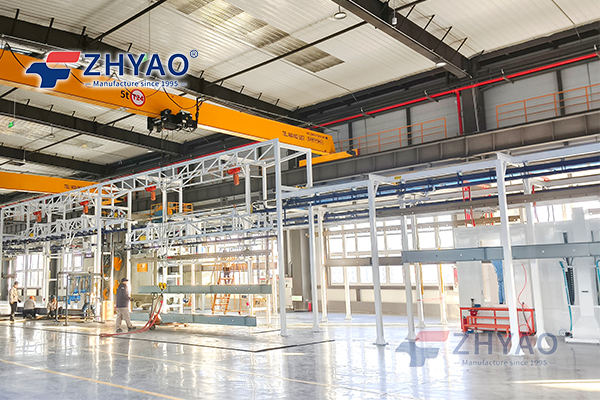
Medium-to-large structural parts → Suspended powder coating line or liquid spraying line is commonly used.
Pipes → Dip coating process or tubular powder coating line can be used.
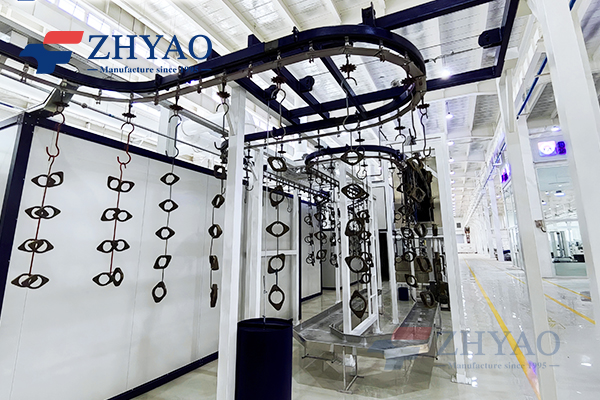
Different workpieces require different process solutions; a single solution cannot be used for all types.
II. Space Planning and Capacity Design
The height, length, and width of the factory building will affect the design of the conveyor system and the layout of drying and curing equipment. For companies with high production volumes, a continuous circular or U-shaped conveyor line should be considered; companies with more flexible production volumes can design segmented or intermittent conveyor structures to balance energy saving and flexible production. III. Importance of Pretreatment System Pretreatment determines paint film adhesion and is the most crucial step in the entire coating process. A well-designed degreasing, phosphating, and washing process can significantly improve the coating's corrosion resistance. For large workpieces, the difference between spray-type and immersion-type pretreatment needs to be considered.
IV. Selection of Spraying Method Common spraying methods include:
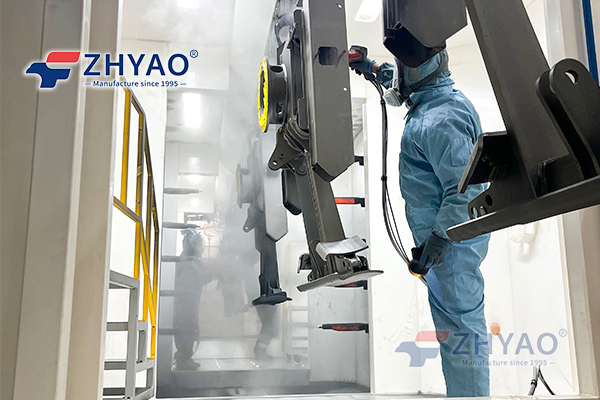
* Electrostatic powder coating: Environmentally friendly, VOC-free, excellent coating performance
* Liquid spraying (wet spraying): Excellent color performance, suitable for complex workpieces
* Dip coating: Strong coverage, suitable for large-volume production of small parts or pipe fittings. Different spraying methods have different equipment requirements; the design must be tailored to the specific process.
V. Curing System and Energy-Saving Solutions The curing oven is the most energy-consuming unit in the coating line. Energy consumption can be significantly reduced through hot air circulation, waste heat recovery, and precise temperature control. For factories with large production fluctuations, a curing oven design with zoned start-stop can improve energy efficiency.
VI. Matching of Conveying Systems The conveying system is not only a "handler" but also a determinant of production capacity. Common types include overhead chain conveyors, ground rail conveyors, and dual-speed chains. Choosing the right conveying method can improve throughput efficiency and avoid bottlenecks.
A well-designed coating production line is key to improving product quality and corporate competitiveness. During the planning phase, companies should communicate thoroughly with professional coating equipment manufacturers to obtain a more scientific design solution.
 How to Calculate the Production Capacity of a Powder Coating Line
 Powder Coating Line Process Explained: From Pretreatment to Final Curing
 Powder Coating vs Wet Painting Differences Explained
 Why Powder Coating Creates a Durable Surface Layer