
Powder Coating vs Wet Painting Differences Explained
In industrial manufacturing, choosing the right coating process directly affects product quality, production efficiency, operating costs, and long-term surface performance.
Powder coating and wet painting are two commonly used coating technologies for metal surface finishing. Both can provide protective and decorative coatings, but they work differently in terms of coating materials, application methods, equipment requirements, curing processes, and suitable applications.
During the design of industrial coating systems, the choice between powder coatingand wet painting is usually determined by several factors, including product material, production volume, coating requirements, factory conditions, and environmental regulations.
Understanding the differences between these two processes helps manufacturers select a coating solution that matches their actual production needs.
What Is Powder Coating?
Powder coating is a dry finishing process that applies powder particles onto a metal surface through electrostatic spraying technology.
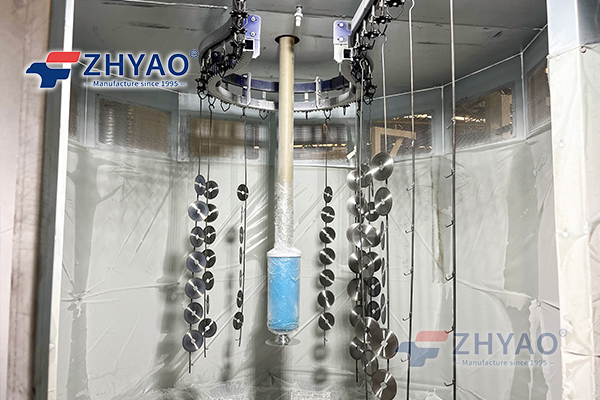
During the coating process, powder particles receive an electrical charge from the spray gun and are attracted to the grounded workpiece. After spraying, the parts enter a curing oven where the powder melts, flows, and chemically cross-links to form a continuous coating film.
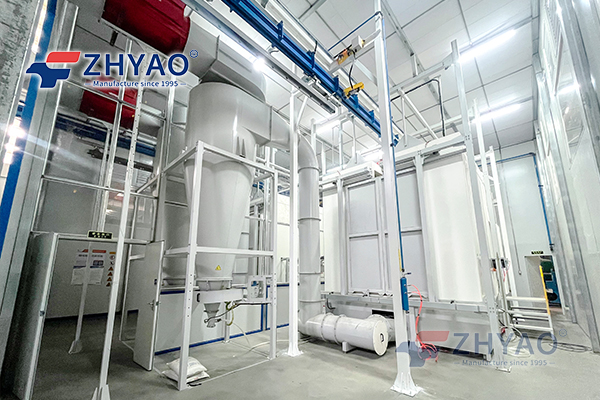
A typical industrial powder coating line includes:
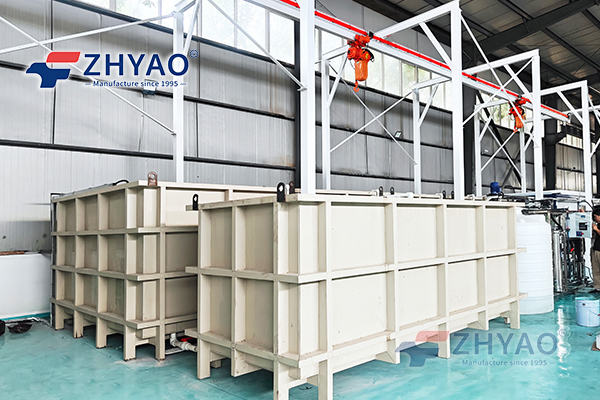
Pretreatment system
Drying oven
Powder coating booth
Electrostatic spray guns
Powder recovery system
Curing oven
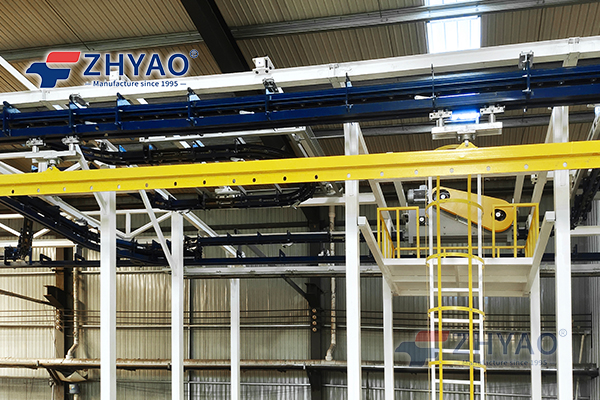
Conveyor system
Because the coating material is applied in dry powder form, powder coating does not require traditional liquid solvents during application. This makes it widely used in automated industrial coating production.
Common applications include:
Metal furniture
Electrical cabinets
Aluminum profiles
Automotive components
Construction metal products
Industrial equipment parts
What Is Wet Painting?
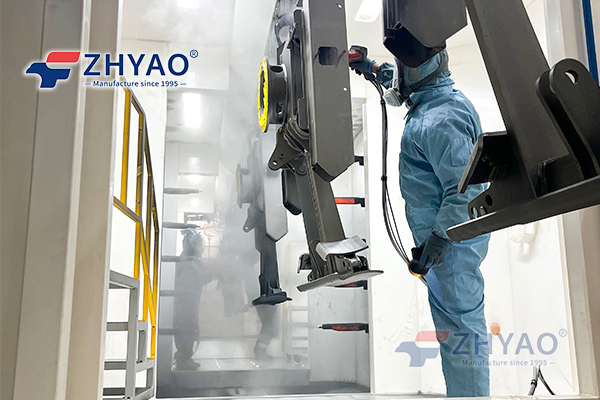
Wet painting is a coating process that applies liquid paint onto a surface through spraying, dipping, or other application methods.
The liquid coating usually contains resin, pigments, additives, and a carrier system such as solvent or water. After application, the carrier evaporates or reacts during the drying process, leaving a solid coating layer on the product surface.
A wet painting system commonly includes:
Paint preparation equipment
Spray booth
Ventilation system
Filtration equipment
Drying or curing equipment
Wet painting is still widely used in industries where appearance customization, special color effects, or multi-layer coating systems are required.
Typical applications include:
Large machinery
Automotive refinishing
Decorative products
Customized industrial parts
Powder Coating vs Wet Painting: Main Differences
1. Difference in Coating Materials
The most basic difference between powder coating and wet painting is the form of coating material.
Powder Coating Material
Powder coating uses solid coating particles made from:
Resin
Pigments
Curing agents
Functional additives
The powder remains solid during storage and application. It becomes a coating film only after the curing process inside the oven.
Wet Painting Material
Wet paint is a liquid coating system. The coating material is dissolved or dispersed in a liquid carrier.
The final coating performance depends on:
Paint formulation
Solvent evaporation
Drying conditions
Application quality
Engineering Consideration
The difference in coating materials affects the entire production line design. Powder coating requires powder spraying and curing equipment, while wet painting requires liquid paint handling, ventilation, and drying systems.
2. Difference in Coating Application Process
Powder Coating Process Flow
A standard powder coating production process usually follows:
Surface Preparation → Pretreatment → Drying → Powder Spraying → Powder Recovery → Curing → Cooling → Inspection
Pretreatment quality is especially important because the coating adhesion and corrosion resistance depend heavily on the cleanliness and surface condition of the workpiece.
Wet Painting Process Flow
A typical wet painting process includes:
Surface Preparation → Primer Application → Drying → Color Coating → Additional Layers → Final Drying
For products requiring high corrosion resistance or special appearance, multiple coating layers may be applied.
Production Line Difference
Powder coating is naturally suitable for continuous automated production because spraying, curing, and conveying can be integrated into one system.
Wet painting provides more flexibility for different coating combinations but usually requires more control over paint preparation, spraying conditions, and drying processes.
3. Difference in Coating Thickness Control
Coating thickness directly influences appearance, protection performance, and material consumption.
Powder Coating Thickness
Powder coating commonly produces a relatively consistent film thickness because the coating material is applied through controlled electrostatic spraying.
Typical industrial powder coating thickness is often around:
60–120 microns
The actual requirement depends on:
Powder type
Product application
Environmental conditions
Performance requirements
Wet Painting Thickness
Wet paint thickness depends more strongly on:
Spray technique
Paint viscosity
Number of coating layers
Drying conditions
For certain applications, multiple thin layers are applied to achieve the required protection or appearance.
Practical Difference
For high-volume production with repeated product specifications, powder coating usually provides easier thickness consistency. Wet painting offers more flexibility when different finishes or customized coating structures are required.
4. Difference in Durability and Surface Performance
Both coating methods can achieve good durability when the complete process is properly controlled.
Powder Coating Performance
Powder coating is commonly selected for applications requiring:
Good impact resistance
Strong adhesion
Abrasion resistance
Weather resistance
For outdoor applications, powder selection is important. Different resin systems, such as polyester-based powders, are chosen according to exposure conditions.
Wet Painting Performance
Wet painting performance depends on the complete coating system, including:
Primer selection
Paint type
Surface preparation
Number of coating layers
For example, a combination of epoxy primer and polyurethane topcoat may be used when additional corrosion protection and appearance requirements exist.
Engineering View
The durability of a coating system is not determined only by the coating material. Pretreatment quality, application parameters, curing conditions, and maintenance also influence final performance.
5. Environmental Difference Between Powder Coating and Wet Painting
Environmental requirements have become an important factor in coating system design.
Powder Coating Environmental Characteristics
Powder coating generally has advantages in:
Lower VOC emissions
Reduced solvent usage
Higher material utilization
Modern powder coating lines often use recovery systems to collect unused powder and improve material efficiency.
Wet Painting Environmental Requirements
Wet painting may require additional environmental control because of:
Solvent emissions
Paint waste management
Air filtration requirements
Worker protection requirements
Water-based paints can reduce solvent content, but proper wastewater and waste management may still be required.
6. Difference in Equipment Configuration
The equipment structure is another important difference between powder coating and wet painting.
Powder Coating Equipment
A complete powder coating system usually contains:
Pretreatment equipment
Powder booth
Automatic spray system
Powder recovery unit
Curing oven
Conveyor system
The system can be designed for manual, semi-automatic, or fully automatic production.
Wet Painting Equipment
A wet painting system usually requires:
Paint mixing area
Spray booth
Air supply and exhaust system
Filtration system
Drying room or curing oven
The equipment design often depends on paint type, product size, and production requirements.
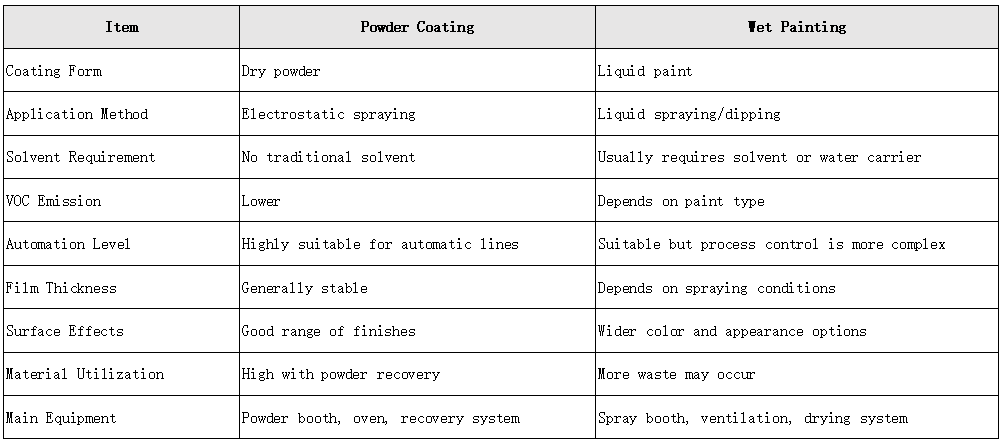
Powder Coating vs Wet Painting Comparison Table
How to Select Between Powder Coating and Wet Painting?
There is no universal answer when choosing between powder coating and wet painting. The correct process depends on the product and production conditions.
Powder Coating Is Suitable When:
Products are mainly metal components
Production volume is continuous
Consistent coating quality is required
Automated production is preferred
Environmental requirements are important
Examples:
Electrical enclosures
Metal furniture
Aluminum components
Industrial frames
Wet Painting Is Suitable When:
Special colors or appearance effects are required
Multi-layer coating systems are needed
Product quantities are limited
Different materials need coating
Examples:
Large equipment
Customized products
Decorative applications
Can Powder Coating Replace Wet Painting?
Powder coating has replaced wet painting in many industrial metal finishing applications, but it is not a complete replacement.
Some products require:
Very specific surface appearance
Complex color matching
Thin coating layers
Special coating systems
In these situations, wet painting still provides advantages.
In industrial production, the better approach is not choosing one technology for all products, but selecting the coating process according to actual manufacturing requirements.
Conclusion: Understanding Powder Coating vs Wet Painting Differences
Powder coating and wet painting are two different industrial finishing technologies with different process characteristics.
Powder coating uses dry powder and electrostatic application, making it suitable for automated production lines, repeated metal product finishing, and applications requiring efficient material usage.
Wet painting uses liquid coating materials and provides greater flexibility in color, appearance, and customized coating structures.
When designing a coating system, manufacturers should consider the complete process, including pretreatment, coating application, curing conditions, production capacity, and future operation requirements.
A properly selected coating process can improve product quality, production stability, and long-term manufacturing efficiency.
Technical Consultation with ZHYAO
ZHYAO provides engineering support for industrial coating system design, including powder coating lines, painting systems, pretreatment equipment, curing ovens, and conveyor solutions.
During project planning, factors such as workpiece dimensions, production output, coating requirements, factory layout, and automation level are evaluated to develop a suitable process configuration.
If you are comparing powder coating vs wet painting for a new production line or an existing coating process upgrade, discussing your requirements with coating system engineers can help determine a practical solution.
【contact us】
 Automatic vs Manual Powder Coating Line
 How Does Pretreatment Quality Affect Powder Coating Adhesion?
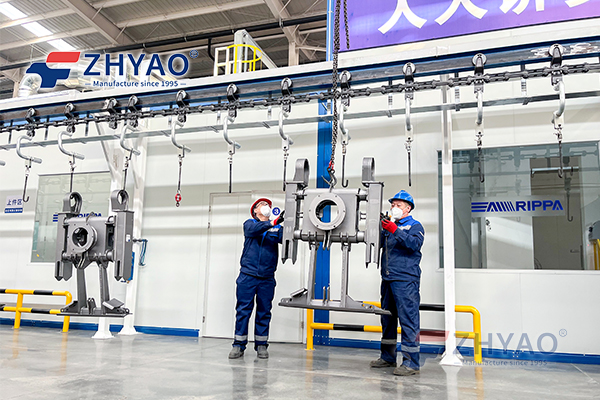 How Does Conveyor Pitch Affect Powder Coating Production?
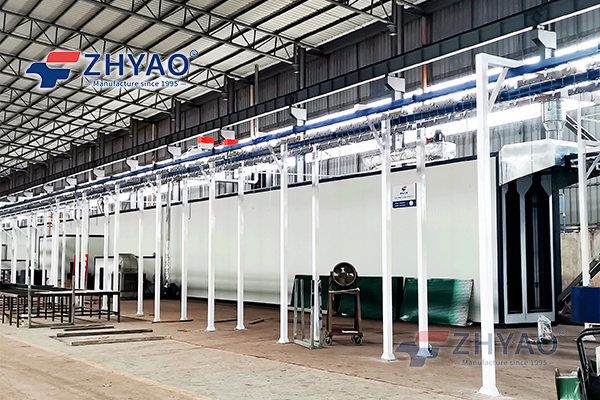 Powder Coating Line with Tunnel Oven