
Is an Automated Coating Production Line Worth the Investment?
Is an Automated Coating Production Line Worth the Investment? An Analysis of Actual Costs and Return on Investment
When considering investment in an automated coating production line, companies often focus solely on the equipment purchase price—a common misconception. In reality, a professional investment analysis should include direct equipment costs, installation and commissioning expenses, infrastructure modification investments, and the operating and maintenance budget for the next five years. Only by establishing a comprehensive cost perspective can a scientific investment decision be made.
1. Operational Cost Savings Form the Foundation of Returns
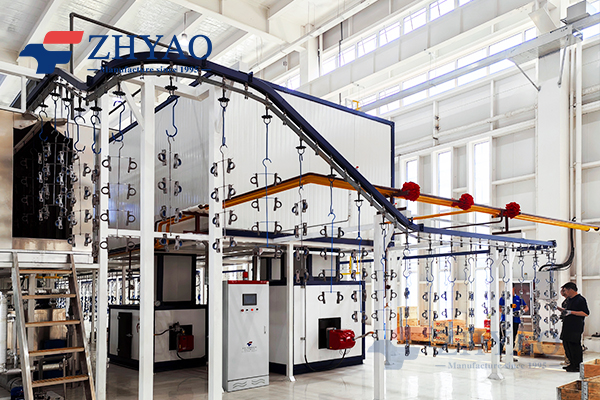
The value of an automated coating production line is primarily reflected in continuous savings during the operational phase. First, there is a significant reduction in labor costs—a medium-scale automated line can reduce the need for 3-5 operators. Second, improved material utilization, thanks to precisely controlled spraying systems, can lower coating consumption by 15-25%. Additionally, improvements in energy management, quality consistency, and other areas also contribute to substantial indirect savings.
2. Key Factors Influencing the Payback Period
The investment payback period is influenced by several factors. Production scale is critical; when annual output exceeds a certain threshold, the advantages of automation become more pronounced. The degree of product standardization is also crucial, as standardized products can fully leverage the efficiency benefits of automated lines. Furthermore, local labor costs, the company's financial situation, and product profit margins all impact the specific payback period, which typically ranges from 1 to 3 years.
3. Quantitative Analysis Supports Scientific Decision-Making
It is recommended that companies adopt a systematic analysis approach: meticulously record all costs of the existing production model, including direct labor, material waste, defect losses, and management costs; then, obtain specific parameters of the automation solution to calculate expected savings; finally, combine the investment amount to determine the payback period. This data-driven analysis method can effectively reduce investment risks.
4. Long-Term Strategic Value Should Not Be Overlooked
Beyond direct financial returns, automated coating production lines also deliver significant strategic value: enhancing the company's technological image, strengthening order fulfillment capabilities, improving the work environment to attract talent, and laying the foundation for future smart manufacturing upgrades. Although these factors are difficult to quantify, they are equally vital for the long-term development of the company.
 How to Calculate the Production Capacity of a Powder Coating Line
 Powder Coating Line Process Explained: From Pretreatment to Final Curing
 Powder Coating vs Wet Painting Differences Explained
 Why Powder Coating Creates a Durable Surface Layer